
Underground pipes fail for a combination of natural and human-made reasons, and most property owners never realize there is a problem until the damage becomes visible. Corrosion, soil movement, tree root intrusion, aging materials, ground freezing and thawing, and nearby construction all contribute to cracks, leaks, and collapses beneath the surface. The longer these issues go untreated, the more expensive and disruptive the repair becomes. Trenchless pipe repair has changed how we address underground damage by fixing pipes from the inside, often with little to no excavation, restoring structural integrity without destroying your yard, driveway, or landscaping.
Corrosion is one of the most persistent threats to underground piping. Cast iron and asbestos cement pipes, which were commonly installed in mid-20th century infrastructure, are responsible for the highest rates of breakage across all pipe materials. According to data from the American Society of Civil Engineers, ductile iron pipes experience a break rate six times higher in highly corrosive soil compared to less corrosive conditions. Over time, the gradual oxidation of metal pipes weakens walls, creates pinhole leaks, and eventually leads to full structural failure. Even modern PVC pipes are susceptible to chemical degradation from aggressive soil conditions, shifting ground stresses, and manufacturing defects that compound over decades.
The ground beneath our feet is not static. As documented by the U.S. Geological Survey, land subsidence affects more than 44,000 square kilometers across 45 states, with the principal causes being subsurface fluid withdrawal, drainage of organic soils, sinkholes, underground mining, and natural consolidation. When the ground shifts, settles, or expands, the pipes buried within it experience stress they were never designed to handle. This movement bends, cracks, or separates pipe sections, leading to misaligned joints, leaks, and in severe cases, complete pipe collapse.
The USGS report on landslide and land subsidence hazards to pipelines notes that ground displacement, settlement, and movement from freeze-thaw processes routinely threaten buried infrastructure. Even small differential settlement can break rigid pipe joints or crack flexible materials that have become brittle with age.
Tree roots are drawn to the moisture and nutrients inside sewer pipes. They enter through small cracks, loose joints, or degraded sections and grow inside the pipe, gradually expanding the opening as they thicken. Once inside, roots catch debris, grease, and other materials, creating stubborn blockages that restrict flow and increase pressure inside the line. Root intrusion is considered the most common problem found in lateral connections, according to NASSCO, the nonprofit trade association for the pipeline rehabilitation industry.
In colder climates, seasonal ground freezing and thawing create repeated expansion and contraction of the soil surrounding buried pipes. This cyclical movement places continuous mechanical stress on pipe walls and joints. Pipes made from clay, cast iron, or thinner PVC are especially vulnerable to cracking during winter months. The expansion of frozen ground can dislodge pipe sections at their couplings, while spring thaw can cause uneven settlement as saturated soil consolidates unevenly around the line.
Pipes laid post-World War II have an average design life of 75 to 100 years, and many segments are now reaching or have already passed that threshold. The ASCE gives America’s drinking water infrastructure a grade of C-minus, estimating the nation needs $625 billion over the next 20 years to reach a state of good repair. When pipes age beyond their intended service life, the material itself fatigues, joints loosen, and the structural capacity of the line drops below what daily use demands.
Construction activity near buried utilities is one of the most preventable yet common causes of damage. Heavy equipment vibrations, excavation near pipe corridors, and changes in soil compaction from new construction can disturb or directly damage underground lines. Even small vibrations from repeated traffic loads above shallow-buried pipes can contribute to gradual fatigue failure.
Trenchless pipe repair refers to a family of methods that rehabilitate or replace underground pipes with minimal surface disruption. Instead of excavating long trenches to access the damaged pipe, trenchless techniques work through existing access points like cleanouts or manholes. The Wikipedia entry on Cured-in-Place Pipe describes CIPP as one of the most widely used rehabilitation methods, with applications in sewer, water, gas, chemical, and district heating pipelines.
CIPP lining involves inserting a resin-saturated felt or fiberglass tube into the damaged pipe, usually from an upstream access point. Once positioned, the liner is inflated using water or air pressure, and the resin is cured through hot water, steam, or ultraviolet light. As the resin hardens, it forms a tight-fitting, jointless, corrosion-resistant new pipe inside the host pipe.
According to NASSCO, CIPP lining has been in use for over 50 years and can rehabilitate pipes ranging from 2 inches to 120 inches in diameter. The process can address cracks, leaks, corrosion, root intrusion, and structural deterioration without the need to dig up yards, driveways, sidewalks, or streets. A properly designed and installed CIPP liner has a minimum life expectancy of 50 years.
Pipe bursting is a trenchless replacement method used when the existing pipe is too deteriorated for lining or when the property owner wants to increase the pipe diameter. A bursting head is pulled through the old pipe, fracturing it outward while simultaneously pulling a new pipe into place. This is the only trenchless method that allows for upsizing capacity, making it a practical solution when older, undersized pipes no longer handle current flow demands.
Additional trenchless techniques include:
| Factor | Traditional Dig-and-Replace | Trenchless CIPP Lining | Trenchless Pipe Bursting |
|---|---|---|---|
| Excavation required | Extensive trench along full pipe length | Minimal, through existing access points | Small entry and exit pits |
| Landscape disruption | Major; yards, driveways, roads destroyed | Minimal; surface left intact | Moderate; limited to pit areas |
| Repair timeline | Days to weeks | Hours to one day | Hours to one day |
| Suitability | All damage types | Cracks, corrosion, roots, leaks | Severely deteriorated or collapsed pipes |
| Capacity change | Can upsize | Same or slightly reduced diameter | Can upsize |
| Post-repair restoration | Extensive; repaving, replanting | None to minimal | Limited to pit areas |
Several variables determine whether trenchless repair is the right solution and how well it performs over time:
| Scenario | Property Type | Problem | Solution | Outcome |
|---|---|---|---|---|
| Collapsed clay sewer under driveway | 1960s single-family home | Tree roots infiltrated 40-year-old clay sewer, causing backups and sewage odors | CIPP lining through existing cleanout | New seamless pipe installed in under a day; driveway left untouched |
| Cast iron water main under mature landscape | Commercial property with established trees | Corroded cast iron main leaking into soil, causing sinkhole formation near foundation | Pipe bursting through entry and exit pits | Old pipe replaced with HDPE; capacity upsized without disturbing tree roots |
| Bellied PVC sewer under public sidewalk | Multi-unit residential building | Ground settling caused PVC sewer to sag, creating chronic blockages | Pipe bursting to replace with properly graded HDPE | Correct slope restored; no sidewalk demolition or permit delays |
| Cracked concrete storm drain under parking lot | Retail shopping center | Structural cracks allowing stormwater infiltration and soil loss beneath pavement | CIPP lining through manhole access | Parking lot remained open; interior sealed against further erosion |
| Aging clay lateral under mature lawn | Historic residential property | Multiple root intrusion points, offset joints, and infiltration | CIPP lateral lining from cleanout | 50-year structural renewal; lawn and hardscape preserved |
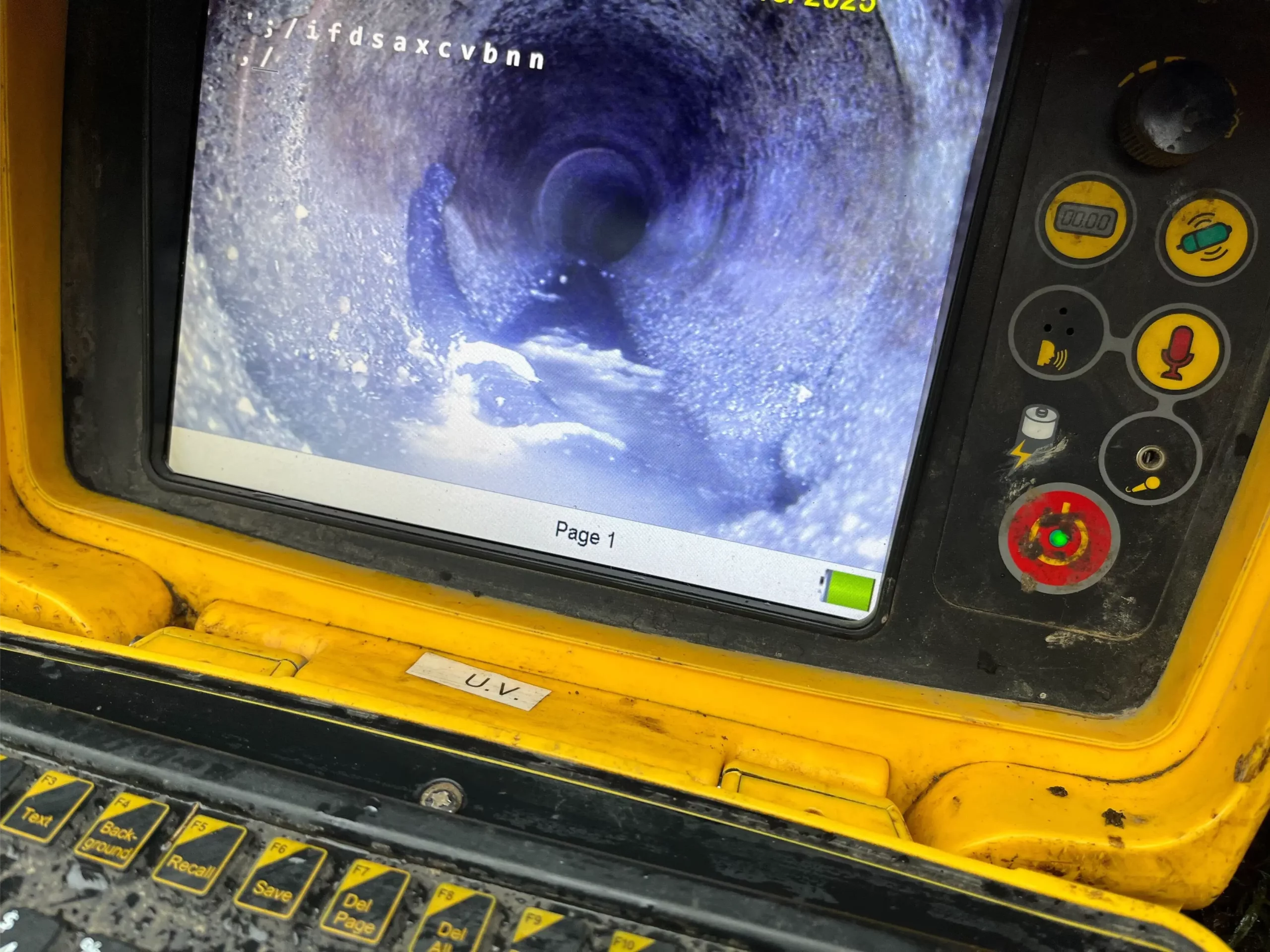
Before any repair decisions are made, run a camera through the line. This is the only way to see exactly what is happening underground. Our technicians use high-resolution cameras to identify the type, location, and severity of damage, including cracks, root penetration, offset joints, corrosion, and bellies.
Not every damaged pipe requires full replacement. Many pipes with cracks, root intrusion, corrosion, or minor structural issues are excellent candidates for CIPP lining. Pipes that have fully collapsed or are severely misaligned may need pipe bursting. Getting an accurate diagnosis first prevents overpaying for work that is not needed.
Slow drains, gurgling sounds, foul odors, wet spots in the yard, and unexplained increases in water bills are all indicators of underground pipe problems. Catching damage early often means the difference between a straightforward trenchless repair and an emergency situation involving water damage, foundation issues, or environmental contamination.
Even after a successful trenchless repair, periodic inspections help catch new issues before they become expensive emergencies. Regular camera inspections every few years are a low-cost way to monitor pipe health and extend the life of the rehabilitation.
When underground pipes fail, you need a team that can diagnose the problem accurately and offer the most effective solution without unnecessary destruction to your property. At All Drain Solutions, our experienced technicians specialize in trenchless pipe repair methods that save your yard, your time, and your budget. Whether you are dealing with root intrusion, corrosion, soil movement, or aging infrastructure, we start every project with a thorough camera inspection so we can recommend exactly the right repair method for your situation.
Call us at (206) 899-7764 or email [email protected] to request a quote or schedule a consultation.
Request a Free Quote | Schedule a Consultation
Slow drains, recurring clogs, sewage odors, wet patches in your yard, and unexplained increases in water or sewer bills are the most common warning signs that warrant a professional camera inspection.
If the pipe has lost its shape or structural integrity, CIPP lining may not be viable, but pipe bursting or targeted excavation can replace the damaged section without full trench replacement.
CIPP liners that are properly designed, installed, and tested have a minimum life expectancy of 50 years, according to NASSCO standards, and pipe bursting installs a new factory-made pipe designed for decades of service.
Trenchless methods including CIPP and pipe bursting are compatible with most common pipe materials including clay, concrete, PVC, cast iron, ductile iron, and ABS.
CIPP lining may slightly reduce the interior diameter, which can be evaluated against current flow requirements, while pipe bursting can actually increase capacity by upsizing the pipe during replacement.