
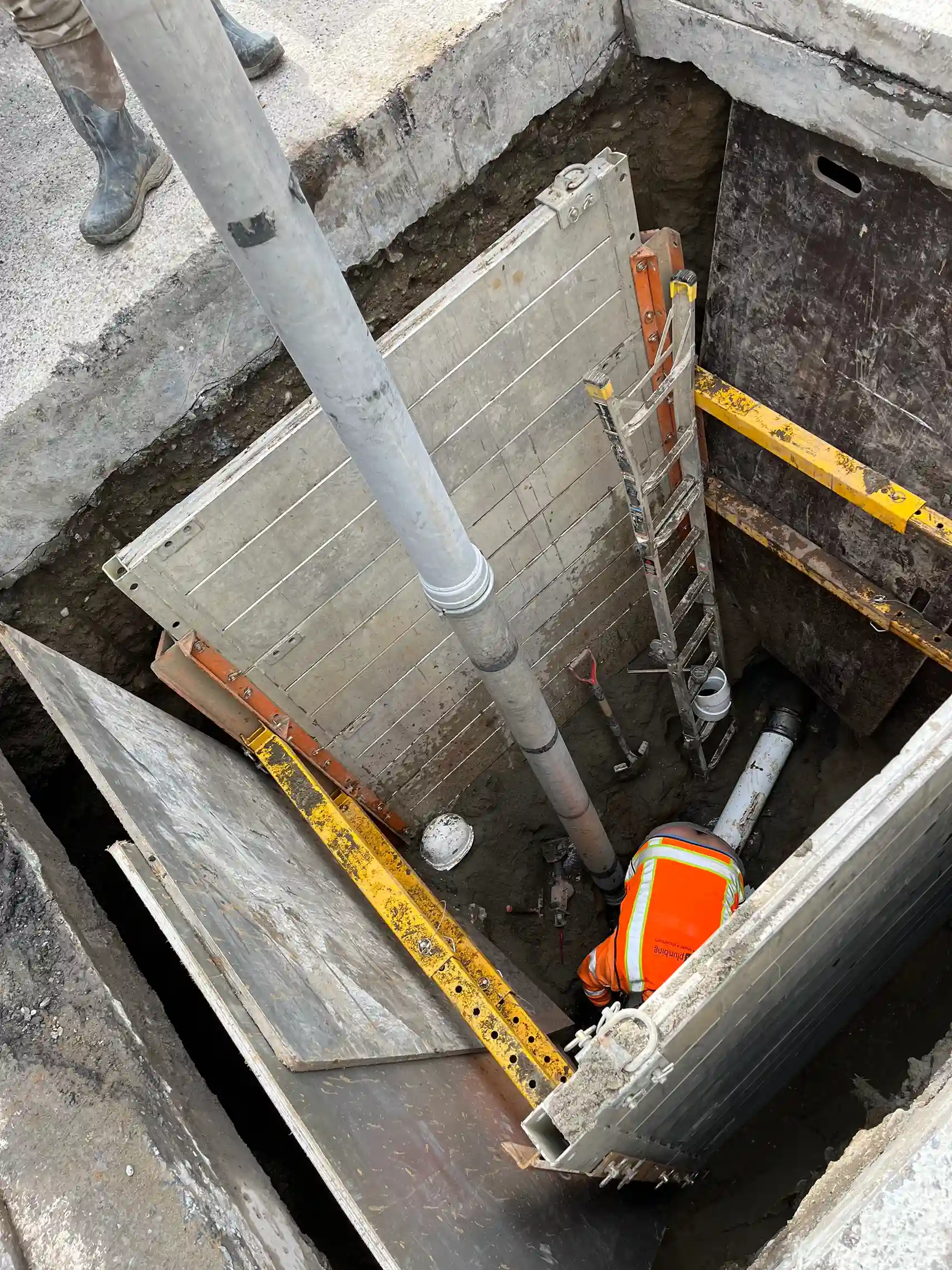
Addressing sewer line problems before they escalate is one of the most effective ways to protect your home or business from catastrophic plumbing failures. Sewer lines operate underground, out of sight, and that invisibility is exactly what makes them so dangerous when neglected. Small cracks, root intrusion, and gradual corrosion can develop quietly for months or years before producing the kind of emergency that forces you to evacuate, shut down operations, or face major restoration work. A proactive approach to sewer line repair targets these hidden weaknesses directly, eliminating the conditions that lead to backups, collapsed pipes, and contaminated water exposure. The right repair strategy depends on the age of your plumbing, the severity of the damage, the pipe material, and the surrounding soil conditions. Below, we break down how sewer line repair prevents emergencies, what warning signs to watch for, and which repair methods deliver the best results for different situations.
Sewer lines deteriorate for a variety of reasons, and most of those reasons develop slowly enough that property owners have time to act. The problem is that without inspection, there is no way to know what is happening underground.
| Cause | How It Develops | Emergency It Triggers |
|---|---|---|
| Tree root intrusion | Roots seek moisture and enter through small cracks or joints, growing larger over time | Complete blockage, pipe collapse, sewage backup into the home |
| Grease and debris buildup | Cooking fats congeal inside cooler sewer pipes; solid debris accumulates | Severe clogs, slow drainage across multiple fixtures, overflow |
| Pipe corrosion and aging | Older materials like cast iron and clay degrade over decades | Cracks, leaks, soil contamination, sinkholes in the yard |
| Ground shifting | Freeze-thaw cycles, soil erosion, and settling compress or misalign pipes | Bellied pipes, joint separation, wastewater leaking into the ground |
| Heavy rainfall infiltration | Stormwater enters cracked pipes through damage or improper connections | System overload, sewage discharge into homes and streets |
According to Wikipedia’s entry on sanitary sewer overflow, approximately half of all sanitary sewer overflows in the U.S. are caused by blockage, with grease responsible for about half of those blockages and solid debris accounting for another 25%. Roots contribute to roughly one-quarter of blockage-related SSOs. These are not random events. Each one has a clear origin point that a professional sewer inspection could have identified before the emergency occurred.
The broader infrastructure picture compounds the risk at the individual property level. The ASCE Infrastructure Report Card gives U.S. drinking water infrastructure a C- grade and notes that pipes laid after World War II have an average lifespan of 75 to 100 years. As of 2023, the average remaining life expectancy of these pipes has actually decreased by 6 years compared to 2018. What this means for homeowners and businesses is that municipal systems are already under strain, making it even more important to maintain the private sewer laterals that connect your property to the public system.
Sewage backups are not just a messy inconvenience. They introduce dangerous pathogens into living spaces, and those pathogens can persist long after the visible water has been removed.
A 2022 pilot study by the University of Maryland tested 40 Baltimore-area homes that had experienced recent sewage backups. The results were striking: 34 of the 40 homes had at least one kind of harmful bacteria. Fourteen homes had more than one pathogen. Seven homes contained bacteria resistant to standard antibiotics, including one home with standing water that tested positive for methicillin-resistant Staphylococcus aureus (MRSA). Perhaps most concerning, some homes still harbored dangerous bacteria more than six months after the initial backup.
The Indiana Department of Health catalogs over a dozen diseases transmitted through sewage or sewage-contaminated water, including:
When a sewer line fails and sewage backs up into a home or business, occupants are exposed to these pathogens through contact with contaminated surfaces, inhalation of airborne bacteria, and cross-contamination of clean water supplies. Repairing the sewer line before a backup occurs eliminates this exposure entirely.
Modern sewer line repair technology has advanced well beyond the old dig-and-replace approach. Trenchless methods now allow our team to fix damaged pipes with minimal disruption to your property while delivering a durable, long-lasting repair.
CIPP lining is the most widely used trenchless rehabilitation method for sewer pipes. According to the City of Portland’s Bureau of Environmental Services, CIPP involves inserting a flexible liner inside the existing pipe, inflating it, and curing it with heat or ultraviolet light. The liner hardens into a smooth, seamless new pipe wall inside the old one, restoring it to near-new condition.
Benefits of CIPP for emergency prevention:
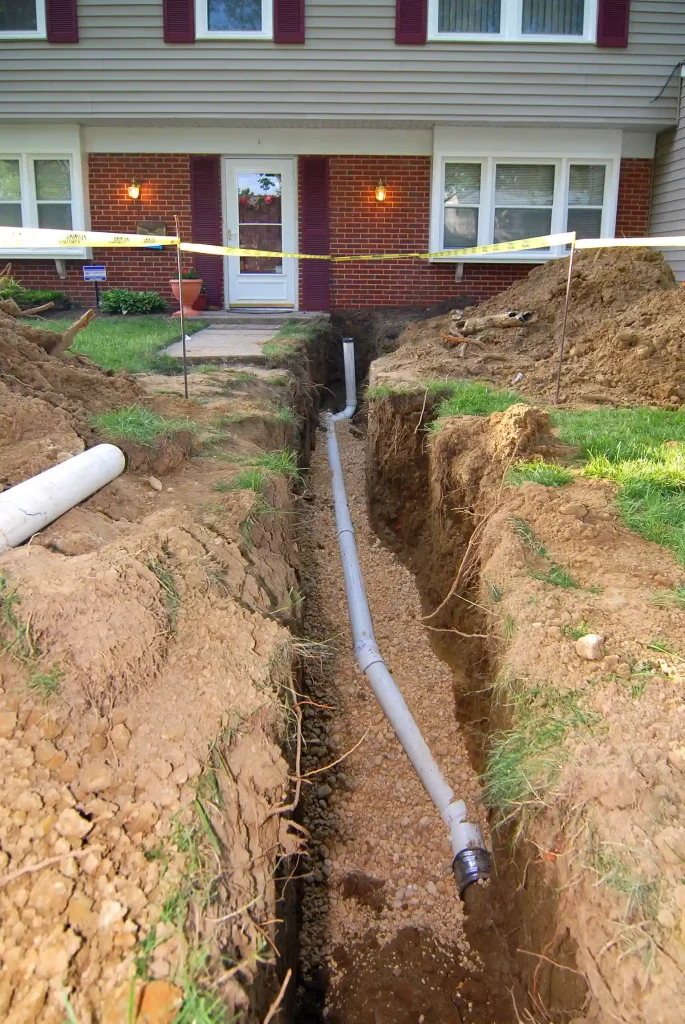
In cases where the pipe has collapsed completely, is severely misaligned, or needs to be upsized, traditional excavation may still be the best option. While more disruptive, a full replacement eliminates every weak point in the line and provides a completely new pipe with a lifespan measured in decades.
Pipe bursting pulls a new pipe through the old one while fracturing the damaged pipe outward. This method is effective when the existing line is too damaged for CIPP but the property owner wants to avoid extensive open trench excavation. It also allows for upsizing the pipe diameter to improve flow capacity.
| Repair Method | Best For | Disruption Level | Longevity | Emergency Prevention Strength |
|---|---|---|---|---|
| CIPP Lining | Cracked, corroded, or root-damaged pipes with intact structure | Low (no digging required) | 40-50+ years | Seals cracks, blocks root re-entry, smooths interior |
| Pipe Bursting | Severely damaged pipes that cannot be lined | Moderate (minimal surface disruption) | 50+ years | Full replacement of damaged section |
| Open Trench | Collapsed pipes, upsizing needs, major structural failure | High (extensive excavation) | 75-100+ years | Complete elimination of all weak points |
| Root Cutting + Repair | Early-stage root intrusion with minor pipe damage | Very low | Varies (requires follow-up) | Temporary relief; must be paired with lining or replacement |
Catching sewer line problems before they become emergencies requires paying attention to what your plumbing system is telling you. These warning signs indicate that a professional inspection and potential repair are needed:
| Property Context | Recommended Approach | Key Reasoning |
|---|---|---|
| Older homes (pre-1970s) | Full camera inspection followed by CIPP lining or replacement as needed | Clay and cast iron pipes are nearing or past end of life; proactive replacement avoids emergency collapse |
| Homes with large trees near the sewer line | Annual inspection with root cutting and preventive lining | Roots will re-enter through any opening; lining seals the pipe permanently |
| Commercial properties | Scheduled biannual inspections with priority on high-use fixtures | High daily water volume accelerates wear and makes emergency disruption far more costly |
| Newer construction (post-2000) | Inspection if any warning signs appear; focus on grease management | PVC pipes resist corrosion but are vulnerable to root intrusion and joint separation |
| Properties in flood-prone areas | Annual inspection plus backwater valve installation | Heavy rain overwhelms aging pipes; backwater valves prevent street-level sewage from flowing backward |
Choosing who handles your sewer line repair matters as much as choosing when to do it. Here is what separates a competent, trustworthy team from the rest:
Proactive sewer line repair is not an expense. It is an investment in the safety, health, and value of your property. Our team at All Drain Solutions has the experience, equipment, and commitment to identify problems early and repair them right the first time. Whether you are dealing with recurring slow drains, suspect root intrusion, or simply want the peace of mind that comes from knowing your sewer line is in good condition, we are ready to help.
Request a Free Quote | Call us at (206) 899-7764 or email [email protected]
Schedule a Sewer Camera Inspection | Let our professionals diagnose your sewer line before small issues become major emergencies.
If clogs keep returning after professional cleaning, or if a camera inspection reveals cracks, root intrusion, or pipe bellies, you need repair rather than temporary clearing.
Yes. Your sewer main carries wastewater from every drain in your property. A blockage or collapse in the main line will eventually impact every fixture connected to it.
Most trenchless repairs, including CIPP lining, complete within a single day. More complex jobs involving multiple pipe sections may take two to three days.
Trenchless methods like CIPP lining require little to no excavation, meaning your lawn, driveway, and landscaping remain largely undisturbed compared to traditional open trench methods.
We recommend a professional camera inspection at least once a year for older properties, properties with nearby trees, or any property that has experienced recurring drain issues.