
Hydro jetting delivers a deeper, more thorough clean than drain snaking, making it the superior choice for long-term pipe health and recurring clogs. Drain snaking punches through a single blockage quickly and at lower cost, making it better for minor, first-time clogs. For Puyallup, WA homeowners dealing with older sewer infrastructure, tree root intrusion, or grease buildup, hydro jetting removes debris from the entire pipe wall rather than just creating a hole through the obstruction. Snaking still has its place for quick fixes and simple stoppages, but if the goal is a cleaner pipe that stays clear longer, hydro jetting is the clear winner.
A drain snake, or auger, is a flexible metal cable fed into a drain or cleanout opening. When the cable encounters resistance, the operator rotates it to either bore through the blockage or snag and pull it out. The tool works by physically displacing whatever is stuck in the pipe. For household clogs like hair in a shower drain or a food obstruction in a kitchen sink, this is usually enough to restore flow.
Snaking targets the immediate problem. It creates a passage through the clog, allowing water to move again. But it does not address residue clinging to the pipe walls, and it leaves behind grease layers, mineral deposits, or partial root masses that will continue to accumulate and cause repeat blockages.
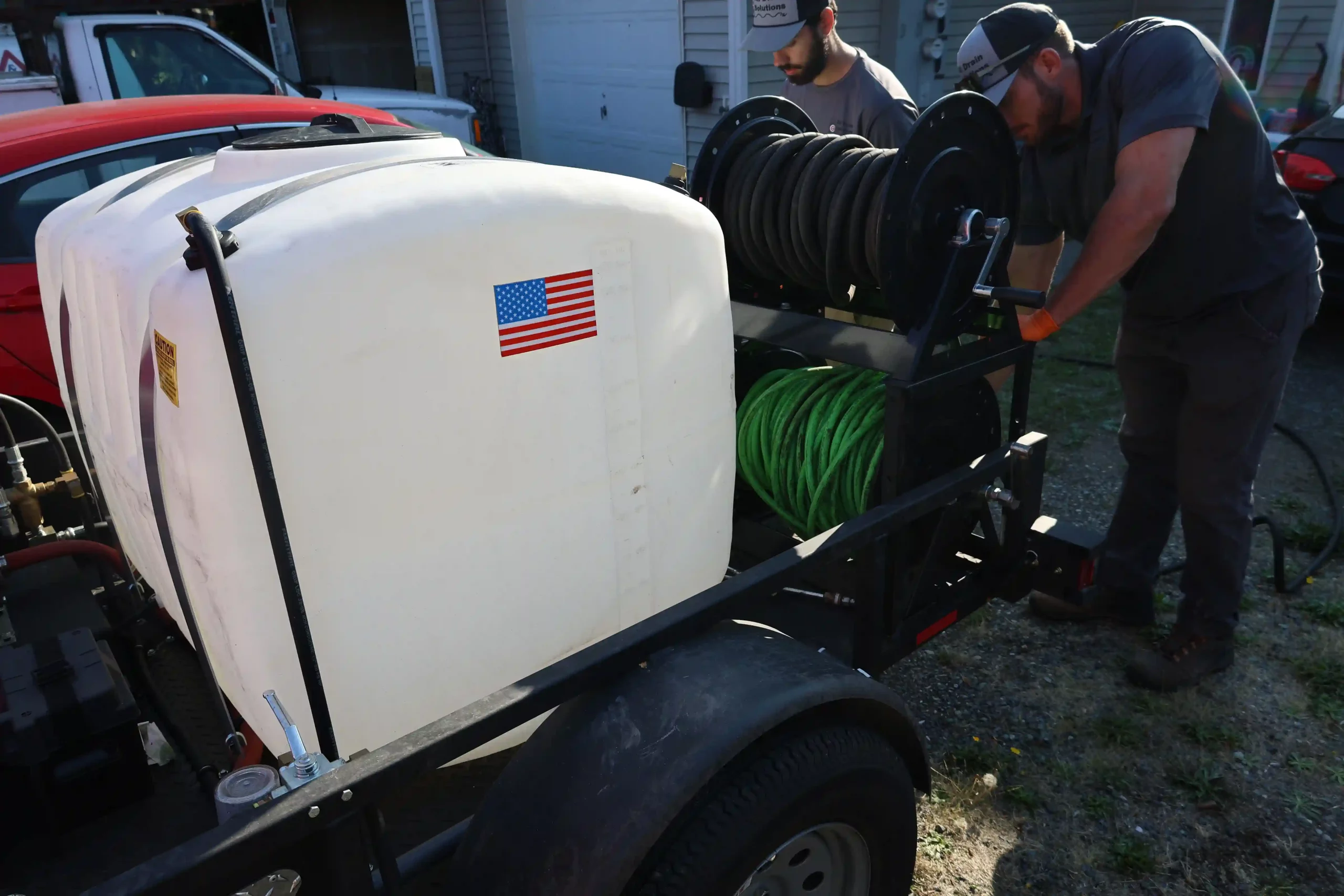
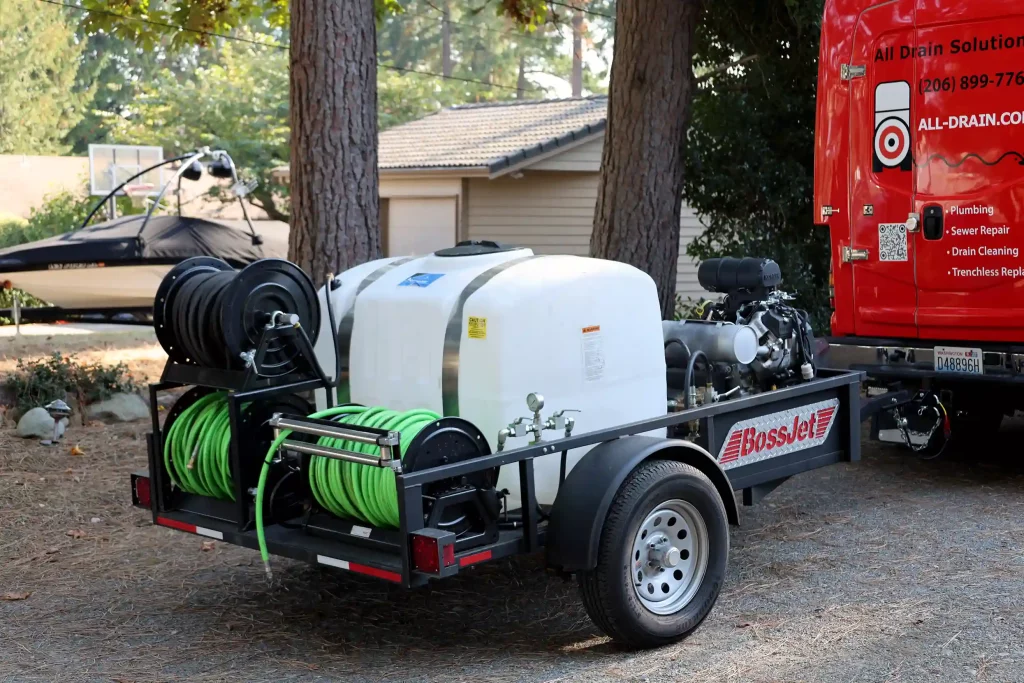
Hydro jetting uses a specialized nozzle attached to a high-pressure hose. Water is forced through the nozzle at pressures up to 4,000 psi, with forward-facing jets to cut through obstructions and reverse-facing jets to propel the hose and flush debris. The multi-directional spray scours the entire interior surface of the pipe, not just the point of blockage.
This method removes grease, soap scum, scale buildup, sand, silt, and small root tendrils that have infiltrated through pipe joints or cracks. After hydro jetting, the pipe interior is essentially restored to near-original flow capacity.
| Factor | Hydro Jetting | Drain Snaking |
|---|---|---|
| Cleaning Depth | Full pipe interior, wall to wall | Narrow channel through the clog |
| Clog Types Handled | Grease, sludge, scale, roots, sand, debris | Hair, food, objects, light blockages |
| Long-Term Results | Months to years before re-clogging | Days to weeks if pipe walls are dirty |
| Pipe Inspection Needed | Yes, to confirm pipe integrity before pressurizing | Recommended but not always required |
| Best For | Recurring clogs, grease buildup, root intrusion, maintenance | First-time minor clogs, emergency quick fixes |
| Access Required | Cleanout access for full line cleaning | Drain opening or cleanout |
| Mess Level | Water flushes through the system | Debris is pulled out on the cable |
Puyallup’s housing stock plays a major role in how often homeowners need professional drain cleaning. According to the City of Puyallup Housing Inventory, approximately 30% of housing within city limits was constructed more than 50 years ago. Older homes typically have clay or cast iron sewer laterals with joints and connections that are vulnerable to root intrusion and cracking over time.
The Pacific Northwest’s wet climate also accelerates soil movement, which can shift and stress underground pipes. Combined with mature landscaping common in established Puyallup neighborhoods, these conditions create an environment where roots seek out moisture from sewer lines. Research from the USDA Forest Service confirms that roots cause more than 50% of all sewer blockages, with the highest rates occurring in older systems with cracked pipes and joints.
The City of Puyallup Sanitary Sewer Standards further require that all new sewer connections be cleaned by jetting or pigging before final acceptance by the city. This requirement reflects the effectiveness of hydro jetting as the industry standard for thorough pipe cleaning.
| Scenario | Property Type | Recommended Option | Reason |
|---|---|---|---|
| Kitchen sink backing up, single occurrence | 1980s home in South Puyallup | Drain Snaking | Isolated clog, likely food debris, quick resolution |
| Recurring slow drains across multiple fixtures | 1960s home near downtown Puyallup | Hydro Jetting | Older main line, likely years of buildup, needs full clean |
| Grease buildup in restaurant kitchen line | Commercial property on Meridian | Hydro Jetting | Grease coats entire pipe wall, snaking only punches a hole |
| Tree root infiltration in sewer lateral | 1970s home with mature landscaping | Hydro Jetting + Annual Maintenance | Roots penetrate joints in older pipes, jetting cuts them back |
| Toilet flushed a foreign object | Any residential property | Drain Snaking | Retrieve the specific object without pressurizing the line |
Hydro jetting is the right choice for:
Hydro jetting is NOT the right choice for:
At All Drain Solutions, we help Puyallup homeowners and business owners determine the right drain cleaning method for their specific situation. Our team starts with a video camera inspection to assess pipe condition, identify the type and location of the blockage, and recommend the most effective approach, whether that is snaking, hydro jetting, or a combination of both. We serve properties across Puyallup and the surrounding area with professional-grade equipment and licensed technicians who understand the local plumbing conditions and code requirements. Reach out to us at [email protected] or call (206) 899-7764 to get started.
Yes, if the pipe is already cracked, corroded, or collapsed, high-pressure water can worsen the damage. This is why our team always runs a video camera inspection before jetting to confirm the pipe is structurally sound and can handle the pressure.
For homes with mature trees near the sewer lateral or a history of recurring clogs, annual or biennial hydro jetting is common. Properties with no history of issues typically do not need scheduled jetting unless a video inspection reveals significant buildup.
No. Snaking can temporarily punch through root masses, but roots will regrow into the same openings. Hydro jetting cuts roots back more thoroughly, and root-cutting nozzles deliver better long-term results, though periodic maintenance will still be needed.
Hydro jetting is one of the most effective methods for grease clogs because the high-pressure water scrubs the grease off the pipe walls rather than just pushing it through. For commercial kitchens, regular jetting is often the best maintenance strategy.
Not always for simple fixture clogs, but it is strongly recommended before hydro jetting any main sewer line. A camera inspection reveals pipe material, condition, blockage type, and exact location, allowing us to choose the safest and most effective cleaning method.