
Most homeowners do not think about their sewer and drain system until something goes wrong, and by then, the damage is often expensive and disruptive. Recognizing the early warning signs of sewer and drain problems, from slow drains and gurgling sounds to sewage backups and soggy yard patches, allows you to act before a minor issue becomes a major emergency. Whether your home is connected to a municipal sewer line or a private septic system, understanding these signals and knowing when to call a professional can protect your property, your health, and your wallet. If you’re looking for a broader overview of how these systems work and the services available, explore our complete sewer and drain services guide.
Before diving into the specific warning signs, it helps to understand the broader context. The American Society of Civil Engineers 2025 Report Card gave wastewater infrastructure a D+ grade, unchanged from 2021. There are approximately 800,000 miles of public sewers and 500,000 miles of private lateral lines across the country, and a significant portion is reaching the end of its service life. Annual capital needs for wastewater and stormwater systems were $99 billion in 2024, but actual funding was only 30% of that amount. This funding gap means aging pipes are more likely to fail, and homeowners need to be proactive about monitoring their own systems rather than assuming everything is working fine underground.
If a single sink or shower drains slowly, the clog is likely local to that fixture. But when multiple drains throughout your home are slow at the same time, the blockage is almost certainly in your main sewer line. All of your home’s drain lines converge into one main pipe that carries wastewater to the street or septic tank. When that pipe is partially obstructed, every fixture in the house feels the effect. You might notice the kitchen sink backs up when you run the washing machine, or the toilet bubbles when someone showers. These interconnected symptoms are a clear signal that the problem is deeper than a plunger can reach.
Gurgling or bubbling noises coming from your toilet, sink drains, or shower are the sound of air being forced through water in your pipes. This happens when a blockage prevents normal airflow through the system, or when a pipe has cracked or collapsed and air is entering where it should not. According to the EPA’s list of failing system signs, gurgling sounds in the plumbing system are one of the most common indicators of a failing sewer or septic system. Occasional gurgling can be harmless, but persistent gurgling across multiple fixtures warrants a professional inspection.
Your sewer system is designed to be a sealed, airtight network. If you smell raw sewage inside your home, around your yard, or near drain cleanouts, there is a breach somewhere. The EPA notes that sewage odors around the tank or drainfield are a common sign of system failure. Inside the home, odors can come from dried-out P-traps, cracked vent pipes, or a backup pushing sewer gas into living spaces. Outside, persistent odors near where your sewer line runs or near your septic drainfield suggest wastewater is leaking into the soil rather than being contained within the system.
This is the most urgent warning sign. When wastewater actually flows backward into your home through toilets, tubs, or floor drains, you have a serious blockage or a collapsed line. Sewage backups are not just messy and disruptive, they are a direct public health hazard. A University of Maryland study published in 2025 found that 34 of 40 homes with recent sewage backups had at least one harmful bacteria, including E. coli and antibiotic-resistant strains. In some homes, bacteria persisted for more than six months after the backup occurred. If sewage enters your home, contact a professional immediately and avoid contact with the contaminated water.
If you notice wet, spongy spots in your yard, particularly along the path where your sewer line runs, or areas of grass that are noticeably greener and more lush than the surrounding lawn during dry weather, you likely have an underground sewer leak. Wastewater acts as fertilizer, which is why the grass above a leaking pipe often looks unusually healthy. The EPA identifies bright green, spongy grass over the septic tank or drainfield during dry weather as a classic sign of system failure. Left unaddressed, these leaks can erode soil beneath your foundation, leading to settlement cracks and structural damage.
If you have mature trees on your property, your sewer lines may be under attack below ground. Tree roots seek out moisture and nutrients, and sewer pipes provide an ideal source. Roots enter through small cracks, joints, or connections in older pipes, then grow inside the pipe, catching debris and gradually blocking flow. The U.S. Forest Service reports that tree roots cause more than 50% of all sewer blockages, and in smaller-dimension pipes, professional root removal every year or every other year is common. Old pipes with joints, shallow pipes, small-diameter pipes, and fast-growing tree species are the most susceptible.
| Warning Sign | What It Indicates | Urgency Level | DIY Fix Possible? |
|---|---|---|---|
| Multiple slow drains | Main line blockage | High | No |
| Persistent gurgling | Air trapped by blockage or pipe damage | Medium to High | No |
| Sewage odors | Cracked pipe or failed seal | Medium to High | No |
| Sewage backup | Complete or near-complete blockage | Emergency | No |
| Soggy yard patches | Underground pipe leak | High | No |
| Frequent clogs (same drain) | Local buildup or root intrusion | Medium | Sometimes |
Ignoring sewer and drain problems does not just risk property damage, it directly threatens the health of everyone in the household. Raw sewage contains pathogens including E. coli, Salmonella, Hepatitis A, Giardia, and Cryptosporidium, among many others. The CDC reports that mold can begin growing within 24 to 48 hours of water intrusion from a sewer leak or backup, triggering allergic reactions, asthma attacks, and respiratory irritation. Children, the elderly, and anyone with a weakened immune system face the greatest risk from both direct sewage exposure and secondary mold contamination. The EPA’s mold guidance states that materials contacted by sewage or contaminated water should always be handled by professionals with experience in contaminated water cleanup.
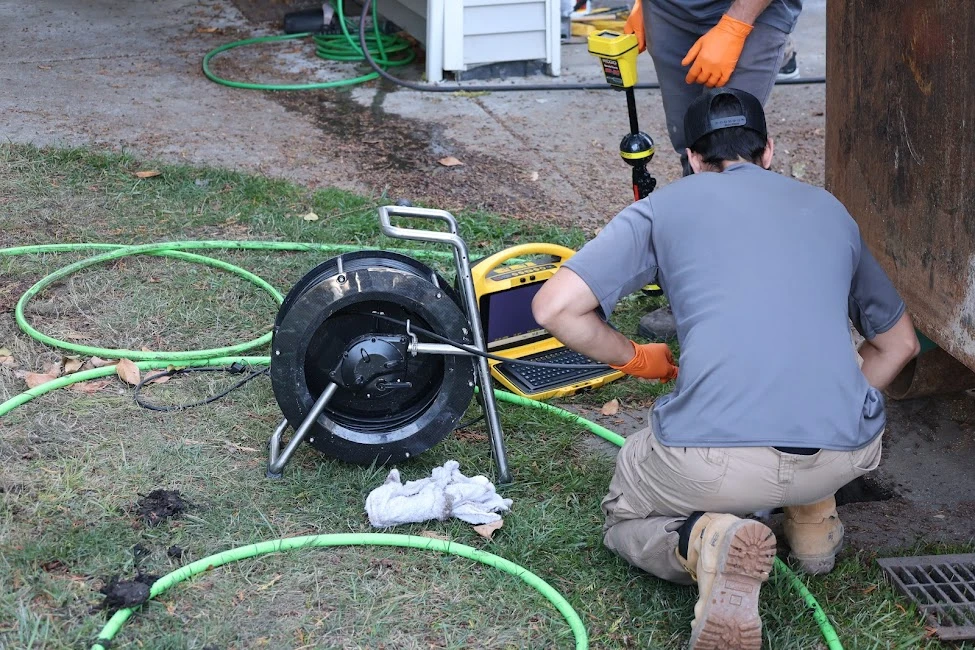
When you call a professional for a sewer and drain evaluation, the process typically includes a video camera inspection of the main line. A waterproof camera is fed through your cleanout or a drain access point, allowing the technician to see the interior condition of the pipe in real time. This inspection can identify tree root intrusion, pipe corrosion, cracks, bellied sections where the pipe has sagged, grease buildup, and complete collapses. Based on the findings, the recommended solution might range from a professional hydro-jetting or mechanical root removal for simple blockages, to trenchless pipe lining or traditional excavation for structural damage. The key advantage of a camera inspection is that it removes guesswork. You see exactly what is wrong, where it is located, and how severe it is before any repair work begins.
Store-bought chemical drain cleaners, plungers, and hand-crank drain snakes can handle minor, isolated clogs in a single fixture. What they cannot do is clear a blockage in your main sewer line, remove tree roots that have infiltrated the pipe, or repair a cracked or collapsed underground pipe. In fact, chemical drain cleaners can worsen certain problems by corroding older pipes or creating hazardous conditions for whoever eventually has to work on the line. When the problem is recurring, affects multiple fixtures, or is accompanied by any of the warning signs listed above, professional equipment and expertise are the only reliable path to a lasting solution.
Choosing a sewer and drain service provider matters as much as recognizing the problem itself. Here are the qualities that separate a trustworthy team from the rest:
If you have noticed any of the warning signs described above, do not wait for the problem to escalate. Our team at All Drain Solutions provides professional sewer and drain inspections, diagnosis, and repair using industry-leading equipment. We assess every situation individually, explain your options clearly, and deliver lasting solutions that protect your home and your family. Request a Free Quote today to get started,so we can identify the exact condition of your sewer and drain lines before small issues become costly emergencies. You can also reach us directly at (253) 200-0451 or [email protected].
If only one fixture is draining slowly, it is likely a localized clog. If multiple fixtures throughout the house are slow simultaneously, or if using one drain causes another to back up, the issue is almost certainly in your main sewer line.
Yes. Tree roots enter through existing cracks, joints, or weak connections in older pipes and grow inside the line. The U.S. Forest Service found that roots cause more than 50% of all sewer blockages, particularly in older systems with aging pipe materials.
Mold can begin growing within 24 to 48 hours of water or moisture intrusion from a sewer leak or backup. The CDC recommends cleaning and fully drying affected areas within that window to prevent mold growth.
Avoid contact with the contaminated water, which contains harmful bacteria and pathogens. Contact a professional sewer and drain service immediately, and consult your local health department for cleanup guidance. Do not attempt to clean sewage with household cleaners alone.
The EPA recommends inspecting septic systems every 1 to 3 years and having the tank pumped every 3 to 5 years. For homes on municipal sewer lines, a periodic camera inspection every few years is a smart preventive measure, especially for homes with older pipes or nearby trees.