
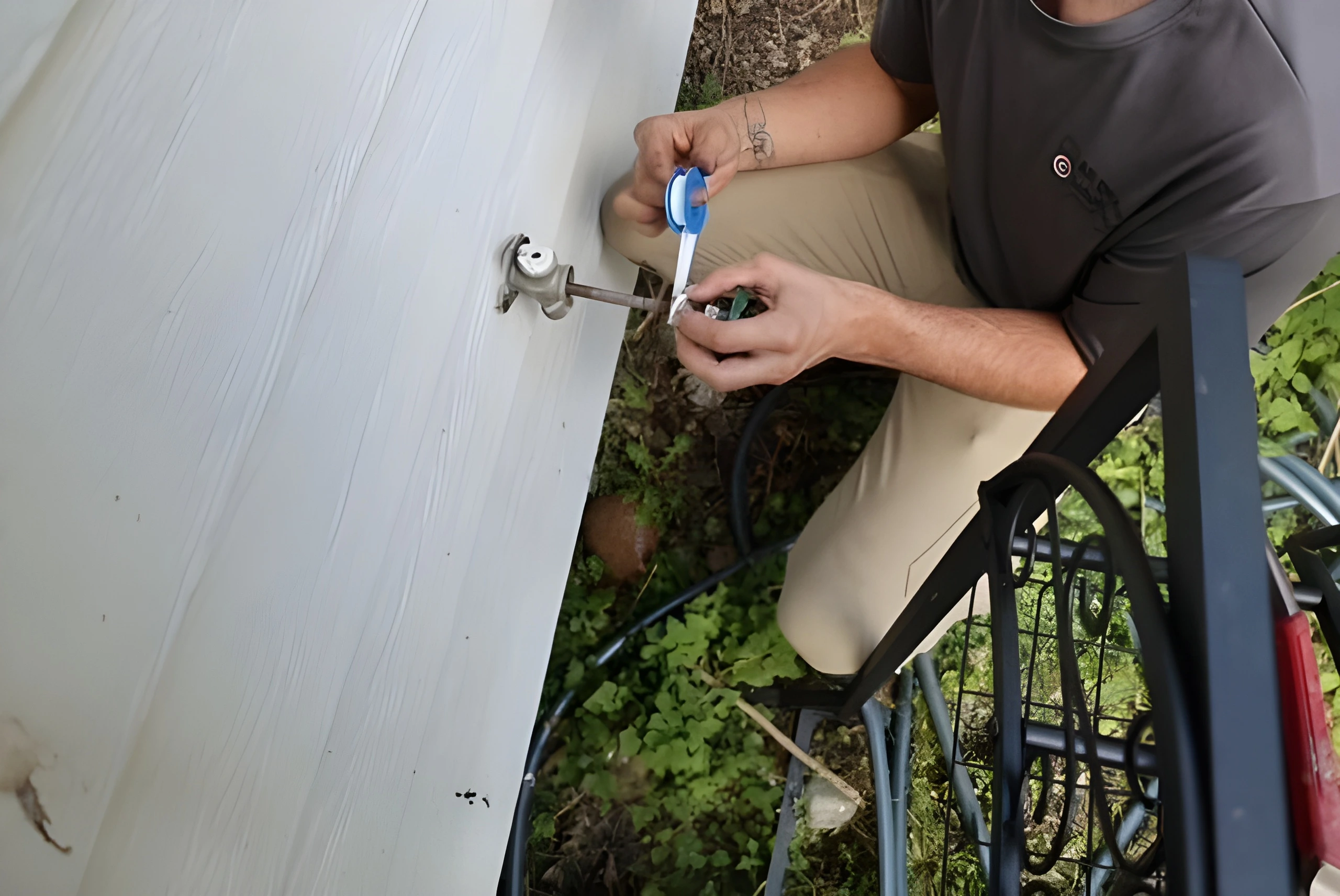
The most reliable outdoor faucet for homes in Puyallup, WA is a frost-proof sillcock (also called a frost-free hose bib) with a built-in backflow preventer, constructed from lead-free brass with a quarter-turn ceramic disc valve. Puyallup winters bring cold, wet conditions with low temperatures averaging near freezing, and the surrounding South Hill elevations frequently drop below 32°F between November and April. A frost-proof sillcock addresses both the freeze risk and the code-compliance requirements that come with outdoor plumbing in Washington state. The right choice depends on your home’s wall thickness, water pressure, how heavily you use the faucet, and whether your current setup includes a proper vacuum breaker.
Puyallup experiences an oceanic climate with cool, wet winters. According to the city’s official documentation, mean January temperatures drop to around 33°F, and surrounding hills averaging 500 feet above sea level see more frequent lows below freezing with greater snowfall. While prolonged deep freezes are uncommon in the Puyallup Valley itself, even a single overnight freeze can crack a standard hose bib that still holds water in the pipe.
A standard outdoor faucet, sometimes called a spigot or sillcock, has its valve mechanism right at the exterior wall. When the temperature drops below freezing, any water remaining in that short section of pipe expands and can split the brass body. The resulting leak may not surface until spring, when you turn the handle and water pours inside your wall cavity or crawlspace.
Frost-proof sillcocks solve this by extending the valve seat 6 to 12 inches (or more) back through the wall into the conditioned space of your home. When you shut off the faucet outside, the water stops well inside the heated area. The long shaft between the exterior handle and the interior valve drains completely because the faucet is installed with a slight downward pitch toward the outside. No water means no freezing, no cracking, and no hidden water damage.
Not every faucet is built for the same situation. Here is a breakdown of the four common outdoor faucet types and how they perform in Puyallup’s conditions.
| Faucet Type | Freeze Protection | Valve Mechanism | Backflow Prevention | Best Use in Puyallup |
|---|---|---|---|---|
| Standard hose bib | None | Compression washer | Usually none | Indoor use only, or quick seasonal replacement |
| Frost-proof sillcock | Yes (valve inside wall) | Compression or ceramic disc | Built-in vacuum breaker | Primary recommendation for all homes |
| Anti-siphon frost-proof | Yes (valve inside wall) | Compression or ceramic disc | Integrated atmospheric vacuum breaker | Homes needing code compliance |
| Wall hydrant | Yes (long bury depth) | Quarter-turn ball or ceramic | Often included | Properties with thick walls or commercial settings |
Standard hose bibs are the oldest and simplest design. The valve sits directly at the exterior, and a rubber washer screws down onto a valve seat to stop flow. Over time, the washer degrades and the valve seat corrodes, leading to the familiar dripping spigot. In Puyallup, these faucets need to be drained and covered or shut off at the interior valve before every freeze, which is easy to forget.
The design extends a long rod from the exterior handle through the wall to the actual valve mechanism inside the home. When installed correctly with a downward slope, water drains out of the shaft after each use. This eliminates the freeze risk without requiring any seasonal maintenance. Most quality models also include a vacuum breaker at the spout to prevent back-siphonage.
These combine freeze protection with an integrated atmospheric vacuum breaker (AVB). The AVB opens to the atmosphere if pressure drops in the supply line, preventing contaminated water from being drawn backward through the hose into your home’s drinking water. This is the type most plumbing codes in the United States require for new installations and replacements.
The valve inside the faucet matters as much as the freeze protection. Most outdoor faucets use one of two internal designs:
Compression (globe) valves use a rubber or neoprene washer that presses against a brass seat. This is the traditional design found in older hose bibs. The washer wears out, the seat corrodes, and eventually the faucet drips. Replacement washers are inexpensive but the repair is a recurring maintenance task.
Ceramic disc valves use two polished ceramic discs that slide against each other to control flow. Ceramic has an extremely low coefficient of friction, especially in the presence of water as a lubricant. These valves require far less maintenance and last much longer than compression designs. When they do eventually need service, the entire interior cartridge is typically replaced as a single unit. Quarter-turn ceramic disc models also offer much easier operation, which matters for anyone with limited hand strength.
For a Puyallup homeowner looking for long-term reliability with minimal upkeep, a frost-proof sillcock with a quarter-turn ceramic disc valve and integrated backflow preventer is the combination that delivers on all fronts.
Most U.S. jurisdictions now require outdoor hose bibs, spigots, and wall hydrants to include a vacuum breaker or backflow preventer. The reason is straightforward: if a pressure drop occurs in your home’s water supply (from a burst main, frozen pipes, or high demand), contaminated water from a garden hose, sprinkler, or fertilizer sprayer can be siphoned back into your drinking water.
A backflow prevention device stops this reverse flow. The simplest version is an atmospheric vacuum breaker (AVB), which vents to the atmosphere and breaks the siphon. More advanced options include pressure vacuum breakers (PVB) and reduced pressure zone (RPZ) devices, though these are more common in irrigation systems than on simple hose bibs.
When selecting a frost-proof sillcock for your Puyallup home, choosing a model with a built-in vacuum breaker ensures you meet code requirements without needing to install a separate backflow preventer. This simplifies installation and reduces potential leak points.
According to the EPA’s WaterSense program, outdoor water use accounts for more than 30 percent of total household water use on average, and household leaks waste approximately 180 gallons per week. While outdoor faucets themselves are not typically labeled under the WaterSense program, the fixtures they connect to (hose-end sprinklers, drip irrigation controllers) can be. Choosing a faucet that operates smoothly without leaking, paired with efficient irrigation practices, contributes meaningfully to reducing water waste.
The EPA notes that households with automatic landscape irrigation systems that are not properly maintained can waste up to 25,000 gallons of water annually. A reliable outdoor faucet is the first point of contact in that system, and a dripping or malfunctioning spigot compounds the problem.
The right frost-proof sillcock depends on a few specifics about your property:
Wall thickness and siding type. Frost-proof sillcocks come in standard lengths (typically 6, 8, 10, and 12 inches). You need a model long enough to reach past your exterior wall, through the siding, and into the heated space with the valve seat fully inside. Stucco, brick veneer, and multiple layers of siding all add thickness. Measuring from the interior shutoff point to the exterior wall face ensures you buy the correct length.
Existing plumbing configuration. If you are replacing an old hose bib that connects to copper or CPVC piping inside the wall, the new sillcock needs a compatible connection (typically 1/2 inch NPT threaded or sweat-solder). Adapters are available but each joint adds a potential leak point.
Water quality. Homes on Puyallup’s municipal water supply generally have low sediment levels, which favors ceramic disc valves. Homes on private wells with higher sediment content may benefit from compression valve designs that are more tolerant of particles, though quality filters at the well head can make ceramic valves viable there too.
Not every problem requires a full replacement, but certain symptoms mean the faucet has reached the end of its useful life:
| Home Type | Recommended Faucet | Key Notes |
|---|---|---|
| Older Puyallup homes (pre-1980) | 10-12 inch frost-proof sillcock with AVB | Older walls tend to be thicker with plaster and lath; measure carefully |
| 1990s-2000s construction | 8-10 inch frost-proof sillcock with ceramic disc | Standard wall framing with vinyl or hardiplank siding |
| New construction or recent remodel | 6-8 inch frost-proof sillcock with ceramic disc and AVB | Often already code-compliant; focus on valve quality |
| Hillside homes (South Hill elevations) | Extra-length frost-proof sillcock (10-12 inch) | Colder temperatures and potentially deeper wall penetrations |
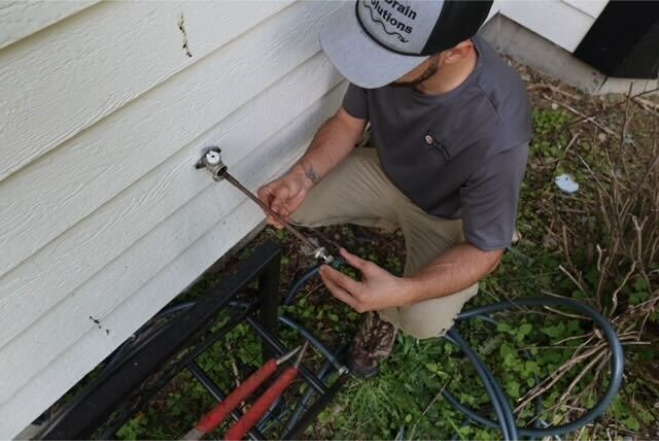
A reliable outdoor faucet installation shows clear qualitative markers. The faucet should operate smoothly with a single quarter-turn, without grinding, sticking, or stiffness. There should be no dripping from the spout when closed. The vacuum breaker should be visible at the top of the spout, and the faucet should have a slight downward pitch toward the outside to ensure drainage. Inside the wall, the connection should be secure with no signs of moisture, and the valve seat should sit fully within the heated portion of the home. A professional plumber will pressure-test the installation, confirm the pipe slope, and verify code compliance before considering the job complete.
All Drain Solutions has been helping Puyallup homeowners with reliable plumbing installations, including frost-proof outdoor faucets that stand up to Pacific Northwest winters. Our team evaluates your wall thickness, existing plumbing, and code requirements to recommend and install the right sillcock for your home, every time.
Request a Free Quote | Schedule a Faucet Assessment
Call us at (253) 200-0451b or email [email protected] to get started. We handle everything from straightforward hose bib replacements to full outdoor plumbing upgrades with code-compliant backflow protection.
A frost-proof sillcock has a long shaft that extends through the wall, and the valve mechanism is located inside the heated space rather than at the exterior surface. If you can see the valve body right at the wall, it is likely a standard non-frost-proof type.
Installation requires access to the interior piping, proper pipe sizing, correct downward pitch for drainage, and code-compliant backflow prevention. A licensed plumber follows established standards from organizations like IAPMO to ensure code compliance, verifying that the job meets Washington plumbing codes and avoids hidden leaks inside your wall.
Disconnect hoses before freezing weather so water can drain from the faucet shaft. A frost-proof sillcock that still has a hose attached can trap water and freeze, defeating its purpose.
The terms are often used interchangeably. A sillcock specifically refers to a faucet that penetrates the foundation sill plate, while hose bib and spigot are broader terms for any exterior water valve.
A slow drip usually means the internal washer has worn down or the valve seat has corroded. In frost-proof models, residual water draining from the long shaft after shutoff is normal and should stop within a few seconds.