
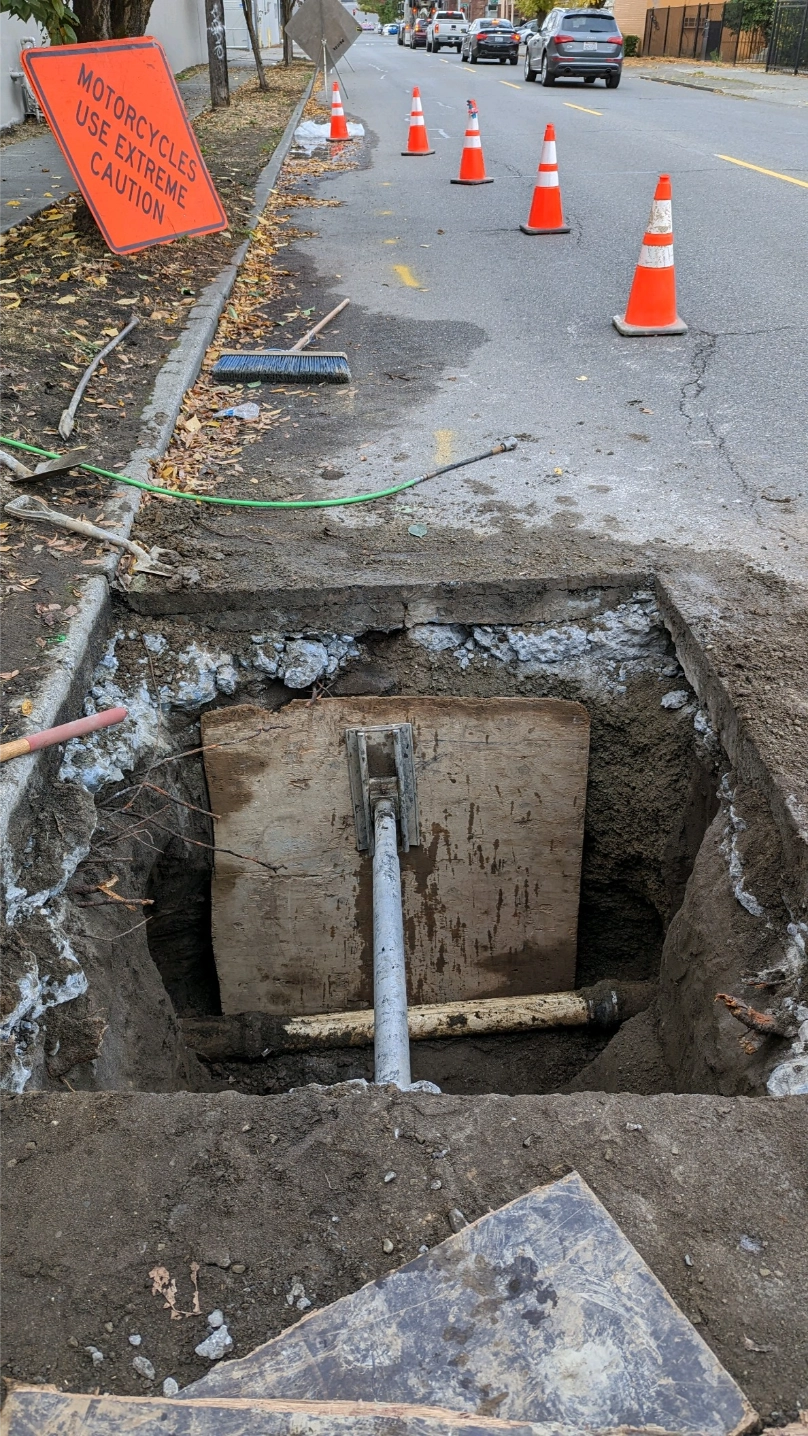
Trenchless sewer line replacement, repairs or replaces underground pipes with minimal to no digging, while traditional sewer line replacement (also called open-cut or dig-and-replace) involves excavating a trench along the entire length of the damaged pipe to remove and replace it. According to the EPA’s Water Technology Fact Sheet on Pipe Bursting, traditional dig-and-replace methods require unearthing the existing pipe along its full length, while trenchless methods use the existing pipe as a conduit for rehabilitation or replacement. The right approach depends on the extent of pipe damage, soil conditions, property layout, and whether the goal is to repair the existing pipe or replace it entirely with a new one.
Traditional sewer line replacement, sometimes called open-cut excavation, is the conventional approach that has been used for over a century. The process is straightforward but labor intensive. A crew digs a continuous trench along the path of the damaged sewer pipe, exposes the pipe, removes it, and lays a new pipe in its place before backfilling and restoring the surface.
The EPA describes this as digging “along the entire length of the existing pipeline, removing the existing pipe, and replacing it with new pipe.” This means every inch of pipe that needs replacement requires a corresponding trench on the surface. For a sewer line running beneath a driveway, sidewalk, mature trees, or a landscaped yard, the restoration work alone can be substantial.
Traditional replacement is still widely used because it provides direct visual access to the pipe, making it easy to identify and correct additional problems like root intrusion, offset joints, or bellied sections. It also allows contractors to change the pipe’s slope, alignment, or diameter without restrictions. When the existing pipe is completely collapsed, heavily corroded, or structurally unsound in ways that prevent a liner from passing through, traditional replacement may be the only viable option.
Trenchless technology refers to a family of methods, materials, and equipment used to install, replace, or rehabilitate underground pipelines with minimal disruption to surface traffic, businesses, and daily activities. Rather than digging a long open trench, trenchless methods use small access points, often through existing manholes or small insertion pits, to reach the damaged pipe.
The two most common trenchless techniques for sewer line replacement are cured-in-place pipe (CIPP) lining and pipe bursting. Each serves a different purpose and has distinct advantages depending on the condition of the existing pipe and the goals of the project.
CIPP is a trenchless rehabilitation method that creates a new pipe inside the existing one. A resin-impregnated felt or fiberglass tube is inserted into the damaged pipe, typically through a manhole or small access pit, and then inflated using water or air pressure. The resin is cured using hot water, steam, or ultraviolet (UV) light, forming a tight-fitting, jointless, and corrosion-resistant pipe within the original host pipe.
According to the EPA, CIPP technologies combine a carrier impregnated with heat, UV light, or ambient-curable resin to form a “pipe within a pipe.” Service connections can be reconnected from within the new pipe using robotically controlled cutting devices.
CIPP is best suited for pipes that still have structural integrity but suffer from cracks, corrosion, root intrusion, or joint failures. It cannot be used when the pipe is completely collapsed because the liner needs a clear path through the host pipe.
Pipe bursting is a trenchless replacement method that fractures the existing pipe from the inside while simultaneously pulling a new pipe into place. A conical bursting head is pulled through the old pipe using a hydraulic winch or pulling rods, breaking the pipe outward into the surrounding soil. A new pipe, typically high-density polyethylene (HDPE), is attached to the back of the bursting head and drawn into the space created by the broken fragments.
The EPA’s fact sheet notes that pipe bursting yields the largest increase in hydraulic capacity of any trenchless method because it physically replaces the old pipe with a new, often larger, one. Other lining methods reduce the inside diameter, while pipe bursting can maintain or even upsize capacity. This makes it particularly useful when a system needs more flow capacity, not just a structural fix.
Pipe bursting requires insertion and receiving pits, though they are far smaller than a full-length trench. It works best with fracturable pipe materials like clay, concrete, cast iron, and PVC, and is less suitable for non-compressible soils like solid rock.
| Factor | Trenchless Methods | Traditional Dig-and-Replace |
|---|---|---|
| Surface Disruption | Minimal; uses small access pits or existing manholes | Extensive; requires full-length trench excavation |
| Property Restoration | Small areas around access points only | Full restoration of trench: landscaping, paving, driveways |
| Project Duration | Typically shorter; hours to days depending on curing time | Longer; excavation, replacement, and restoration add time |
| Pipe Capacity | CIPP slightly reduces diameter; pipe bursting can maintain or increase | Can change to any diameter or slope without restriction |
| Best Pipe Condition | Structurally intact but damaged (cracks, corrosion, roots) | Any condition, including fully collapsed or misaligned pipes |
| Soil Constraints | Rocky, dense, or waterlogged soils can limit trenchless methods | Works in nearly all soil conditions |
| Noise and Emissions | Reduced construction noise and equipment emissions | Higher noise, more equipment, greater emissions |
| Traffic Impact | Fewer detours, less disruption to pedestrians and vehicles | Road closures, detours, and extended construction zones |
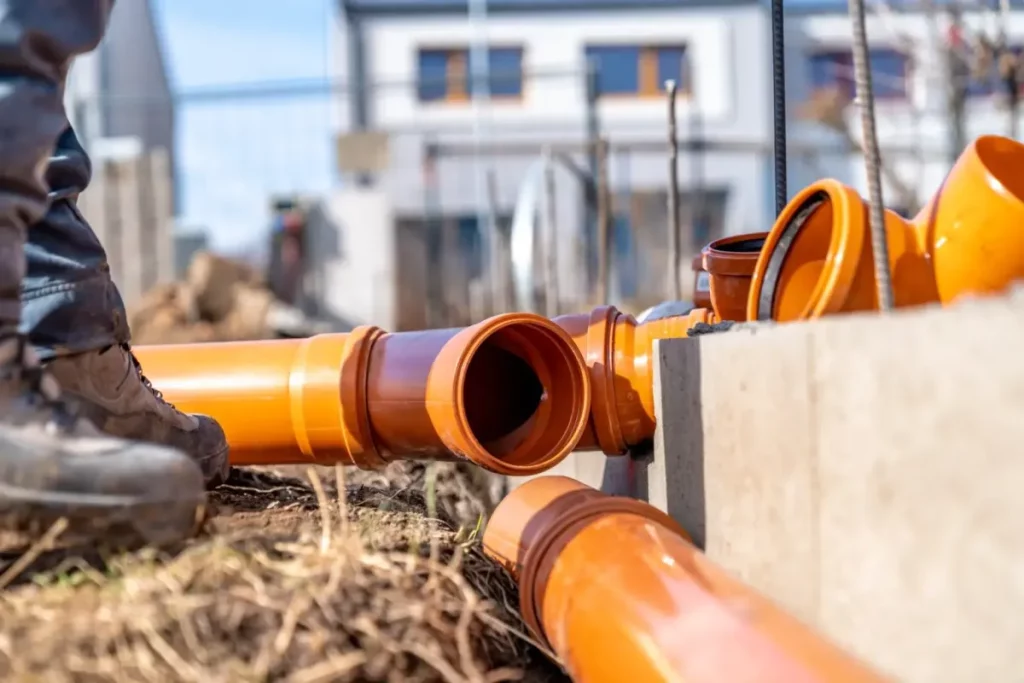
The EPA emphasizes that trenchless rehabilitation methods reduce surface disturbance, which translates to fewer traffic and pedestrian detours, less tree removal, decreased construction noise, and lower air emissions from heavy equipment. In wetland areas or locations with established vegetation, the EPA notes that trenchless methods can reduce harmful impacts to plants and aquatic habitat. In some cases, trenchless technology may be the only practical way to replace sewers in environmentally sensitive areas.
For residents and business owners, less disruption means shorter project timelines, less property damage, and a faster return to normal operations. These benefits are particularly meaningful in dense neighborhoods, commercial districts, and areas where road closures would have outsized economic consequences.
Choosing between trenchless and traditional sewer line replacement depends on your specific pipe condition, property layout, and long-term goals. At All Drain Solutions, our experienced team evaluates every job with a thorough camera inspection and soil assessment before recommending the most effective approach. Whether your line needs a cured-in-place liner, pipe bursting, or a full traditional replacement, we handle it all with minimal disruption to your property.
Request a Free Quote | Schedule a Sewer Line Inspection
Call us at (206) 899-7764 or email office@all-drain.com to get started. We respond quickly and give you honest, straightforward answers so you can make the best decision for your home or business.
Trenchless methods work on most common pipe materials including clay, cast iron, concrete, PVC, and Orangeburg, but the specific technique must match the material. Pipe bursting, for example, does not work on HDPE pipe, and CIPP lining requires a pipe that is still structurally passable for the liner insertion.
CIPP liners can last 50 years or more when properly installed and maintained, which is comparable to the lifespan of a new PVC or HDPE pipe installed through traditional replacement. Both approaches require proper installation and periodic maintenance to reach maximum service life.
CIPP lining reduces the inside diameter slightly, which can decrease flow capacity by a small amount. Pipe bursting, on the other hand, can maintain or even increase capacity by installing a larger diameter pipe. Traditional replacement allows for any diameter change but involves significantly more excavation.
Trenchless methods cause far less surface disruption than open-cut excavation in most cases, but they are not completely disruption-free. Both CIPP and pipe bursting require access pits, bypass pumping of sewage during installation, and temporary equipment staging. However, the disruption is confined to small areas rather than the full length of the pipe.
If a trenchless method encounters an unexpected obstruction or condition that prevents completion, such as a full collapse or dense rock formation, the crew can switch to a traditional excavation approach. This is one reason why choosing a provider experienced in both methods matters: they can adapt without leaving your property in a compromised state.