
When your tankless water heater starts delivering lukewarm showers or alternating between hot and cold, the problem usually comes down to a handful of common culprits: mineral scale buildup, restricted water flow, gas or electrical supply issues, or an undersized unit for your household demand. Most inconsistent heating problems are fixable, but identifying the root cause quickly matters because neglecting the issue can lead to permanent damage to the heat exchanger. The right fix depends on whether the unit was installed correctly, how hard your local water is, and how often the system has been maintained. We have seen these problems repeatedly in the field, and in almost every case, early intervention saved our customers from far more expensive tankless water heater repairs down the road.
Tankless water heaters work by passing cold water through a heat exchanger that fires on demand. Unlike traditional tank units that store hot water, there is no buffer. That means any disruption in flow rate, fuel supply, or heat transfer shows up immediately as a temperature change at the tap.
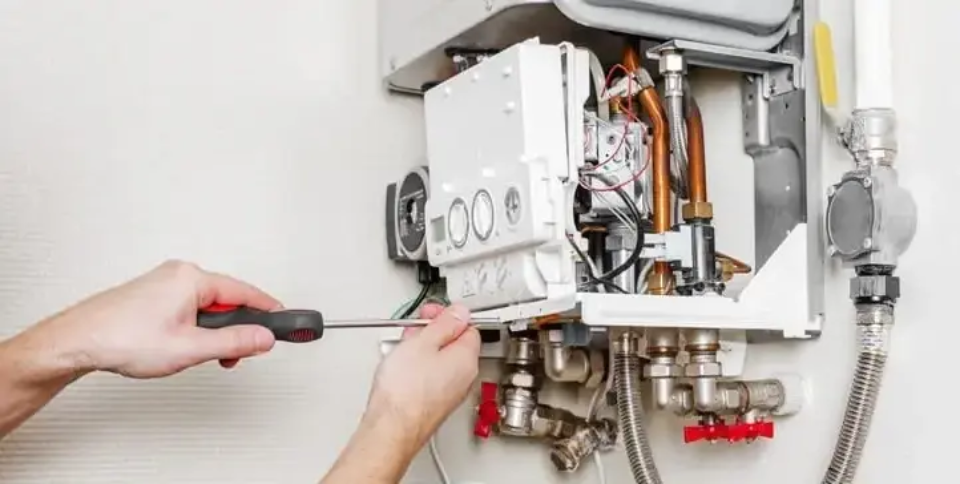
The system relies on several components working together: a flow sensor that detects water movement, a gas valve or electrical element that activates the burner, a heat exchanger that transfers thermal energy to the water, and a thermostat that monitors output temperature. When any one of these components is compromised, you get inconsistent results.
Hard water is the biggest enemy of a tankless water heater. When water containing dissolved calcium and magnesium is heated at the high temperatures inside a tankless heat exchanger, those minerals precipitate out and form scale on the internal surfaces. According to the USGS, water hardness above 121 mg/L is classified as hard, and above 180 mg/L is very hard. The USGS also notes that when hard water is heated, solid deposits of calcium carbonate can form, reducing equipment life, raising heating costs, and clogging pipes.
A municipal government report from the City of Anna, Texas documented exactly this problem: multiple homeowners with tankless water heaters approximately four years old experienced reduced water pressure and debris in their water lines due to scale buildup. The report explains that the high temperatures inside a tankless unit cause calcium to separate from the water faster than in a traditional tank, and the smaller internal passages mean scale has a greater impact much sooner. The buildup essentially acts as insulation between the burner and the water, forcing the unit to work harder while delivering less consistent heat.
| Cause | What Happens | Severity | Fixable by Homeowner |
|---|---|---|---|
| Mineral scale buildup | Scale coats heat exchanger, blocking heat transfer | High | Descaling (with guidance) |
| Clogged inlet filter | Low flow fails to activate burner | Medium | Yes, clean filter screen |
| Undersized unit | Cannot meet simultaneous demand | High | No, may need upgrade |
| Gas pressure issues | Burner cannot sustain flame | High | Requires professional |
| Faulty flow sensor | Burner activates late or not at all | Medium | Requires professional |
| Cold water sandwich | Residual hot water followed by cold burst | Low | Adjust usage or add buffer |
| Venting blockage | Unit shuts down for safety | High | Requires professional |
Before calling for service, there are a few things you can check on your own. Start with the simplest possibilities and work toward more complex causes.
Most tankless water heaters have an inline filter screen where cold water enters the unit. In homes with hard water or older plumbing, this screen can become clogged with sediment and debris. When the filter is blocked, water flow drops below the activation threshold, and the burner never fires. Turn off the cold water supply, remove the filter, clean it, and reinstall. This alone resolves inconsistent heating in a surprising number of cases.
Modern tankless units display error codes when a component malfunctions. Consult your owner’s manual to decode the message. Common codes point to issues like overheating, flame failure, or flow sensor problems. An error code gives your technician a head start on diagnosis, which can save time and reduce the chance of misdiagnosis.
Ask yourself whether the inconsistent heating happens when multiple fixtures are running at the same time. A tankless unit has a finite capacity, measured in gallons per minute (GPM). If your household routinely demands more hot water than the unit can produce, the system will deliver lukewarm water or fluctuate between temperatures. The DOE Building America research confirmed that tankless water heater efficiency depends heavily on draw volume, and that performance approaches rated efficiency only at higher individual draw volumes. If your household frequently draws water from two or three fixtures simultaneously, your current unit may simply be too small.
For gas units, inconsistent heating can result from fluctuating gas pressure. If the gas line was undersized during installation, or if other gas appliances are competing for supply when the water heater fires, the flame will be weak and the output temperature will suffer. For electric units, a tripped breaker, loose wiring, or a failing heating element can produce the same symptom. If you suspect a gas pressure problem, do not attempt to fix it yourself. Gas work requires a licensed professional.
If mineral buildup is the cause of your inconsistent heating, descaling is the fix. The process involves circulating a descaling solution, typically white vinegar or a manufacturer-approved chemical, through the heat exchanger for about an hour to dissolve calcium and magnesium deposits.
The City of Anna, Texas report specifically recommends using kitchen-grade vinegar pumped through the system for approximately one hour. The vinegar dissolves calcium deposits and restores heat transfer efficiency. The report also recommends having a licensed plumber perform this work unless the homeowner has the specific knowledge and expertise to do it themselves.
How often should you descale? That depends on your water hardness. In soft water areas, annual maintenance may be sufficient. In hard water regions, twice per year is a more appropriate schedule. Check your local water utility report or have your water tested to determine where you fall on the hardness scale.
Not every inconsistent heating problem requires a new unit. Use these guidelines to assess your situation:
Repair is usually the right call when:
Replacement may be necessary when:
The Consumer Federation of America notes that new DOE efficiency standards finalized in late 2024 will require electric or gas tankless water heaters to use approximately 13% less energy than today’s least efficient models. If your current unit is more than a decade old, replacing it with a compliant model could yield noticeable energy savings alongside consistent heating performance.
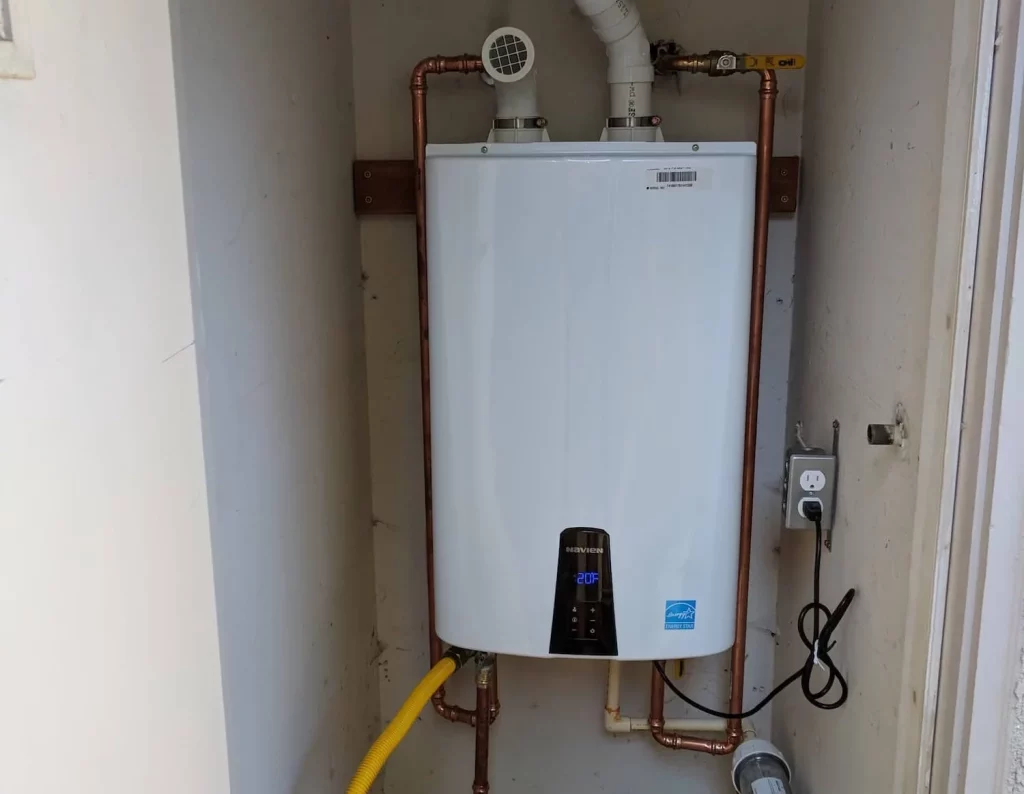
Choosing the right professional to diagnose and fix your tankless water heater matters as much as choosing the right doctor for a health concern. Look for these indicators:
Once your system is back to reliable performance, a few habits will help keep it that way:
Consistent hot water from a tankless unit is not something you should have to think about. When the system is properly maintained and correctly matched to your household demand, it delivers reliable performance for many years.
If your tankless water heater is not heating consistently, our team at All Drain Solutions can diagnose the problem and get it resolved quickly. We have extensive experience with all makes and models, and we take the time to identify the actual cause rather than just swapping parts. Whether you need a descaling, a flow sensor replacement, a gas pressure evaluation, or a complete system assessment, we are here to help.
Request a Free Quote | Schedule a Diagnostic Assessment
Call us at (253) 200-0451 or email [email protected] to get your hot water flowing consistently again.
This usually points to a flow rate issue. Distant faucets may not draw enough water to trigger the burner activation threshold, or there could be scale restricting flow at a specific branch line.
Hard water will not destroy the unit overnight, but over several years the mineral scale buildup can reduce efficiency, cause inconsistent heating, and shorten the lifespan of the heat exchanger. Regular descaling prevents this.
If you get lukewarm water when two or more fixtures are running simultaneously, your unit may be undersized for your household demand. A professional can calculate your peak GPM requirement and recommend the right size.
Yes, a brief burst of cold water when you turn the tap back on after a short pause is normal behavior for tankless units. The residual water in the pipes has cooled. If the cold burst lasts longer than a few seconds, there may be a more serious problem.
In areas with soft water, annual descaling is usually sufficient. In hard water areas with mineral content above 121 mg/L, descaling every six months is recommended to maintain consistent performance.