
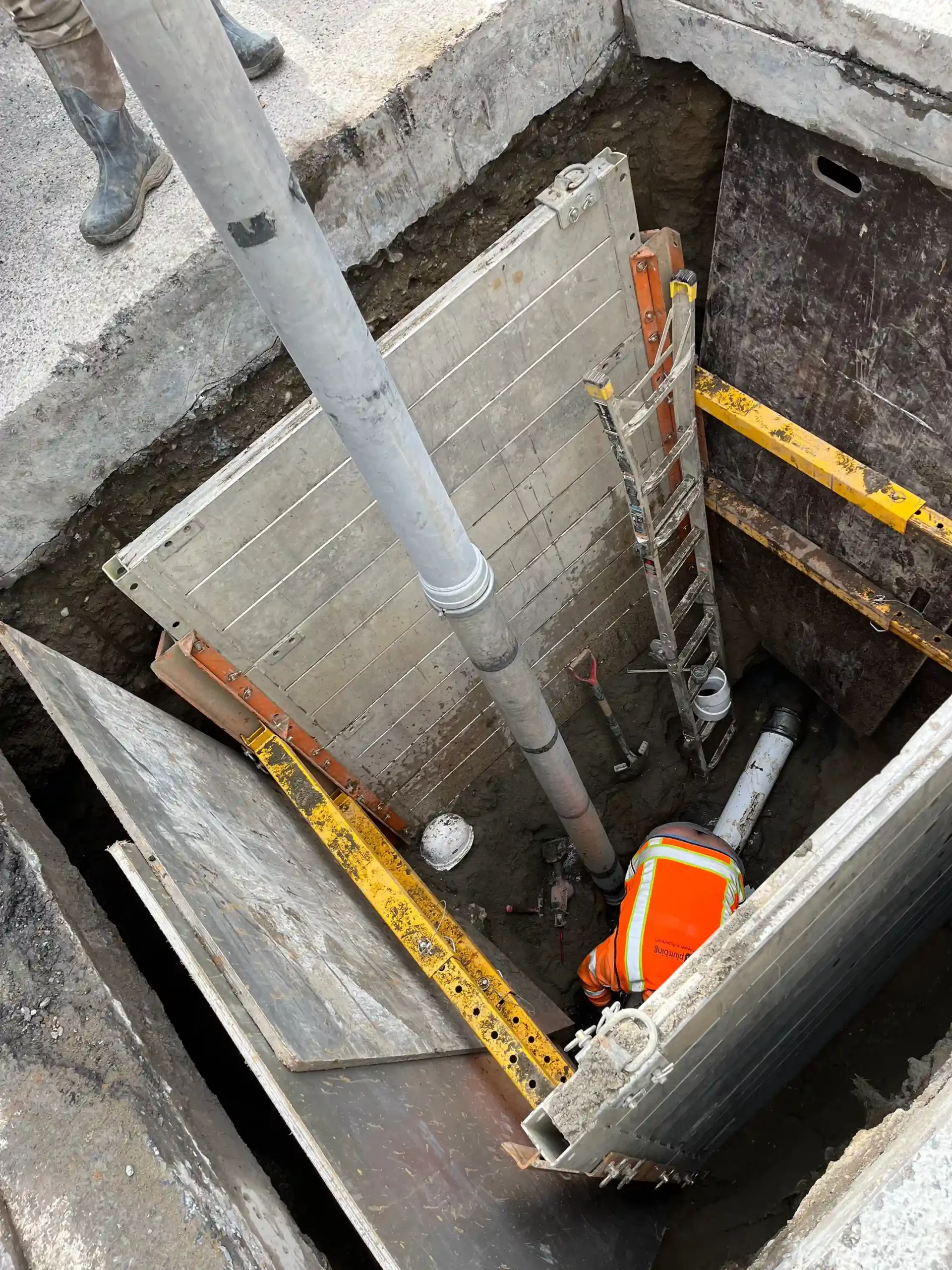
Trenchless pipe repair is often the smarter, more efficient option when your existing underground lines are structurally intact enough to support rehabilitation rather than complete removal. According to Wikipedia’s overview of trenchless technology, the approach encompasses a family of methods including cured-in-place pipe (CIPP), pipe bursting, sliplining, and mechanical spot repair, all designed to work underground with minimal surface disruption. The right choice between trenchless repair and full replacement depends on the condition of your pipes, the severity and location of damage, soil conditions, pipe material, and whether you need to upsize the diameter. Trenchless methods shine when you have localized cracks, root intrusion, corrosion, or joint failures in otherwise stable lines. Full replacement becomes necessary when the pipe has collapsed, is severely misaligned, or needs to be upsized beyond its current capacity. Both approaches have a place in proper infrastructure maintenance, and understanding when each applies saves time, money, and property damage.
Trenchless rehabilitation methods access existing pipelines through minimal excavation points, typically at cleanouts or manholes, rather than digging a continuous trench along the entire length of the pipe. The most widely used method is cured-in-place pipe (CIPP) lining, which involves inserting a resin-saturated felt or fiberglass liner into the damaged pipe, inflating it with water or air pressure, and curing it with hot water, steam, or UV light to form a new, jointless pipe within the old one.
As described by the City of Portland’s Bureau of Environmental Services, the process involves cleaning the existing pipe, removing roots and debris, inserting the flexible liner through a maintenance hole, and curing it in place. The result is a smooth interior surface that restores the pipe to near-new condition. This method works on both short and long pipe runs and is suitable for lines that do not need to be upsized.
Pipe bursting is another trenchless option, which fractures the old pipe from the inside while simultaneously pulling a new high-density polyethylene (HDPE) pipe into place. This method allows for upsizing, unlike CIPP, but requires slightly more surface access at the entry and exit points. Both methods are recognized within the International Plumbing Code maintained by the International Code Council.
Understanding where each method fits requires looking at the practical differences in scope, disruption, and longevity.
| Factor | Trenchless Pipe Repair | Full Pipe Replacement |
|---|---|---|
| Excavation Required | Minimal access points only | Continuous trench along entire pipe length |
| Property Disruption | Lawns, driveways, and landscaping preserved | Extensive surface damage requiring restoration |
| Project Timeline | Typically completed in 1 day | Often requires several days to weeks |
| Pipe Diameter | Same size or smaller (CIPP); same or larger (bursting) | Any size possible |
| Best Pipe Conditions | Cracked, corroded, root-infiltrated, joint-separated | Collapsed, severely offset, bellied, or upsized needs |
| Restoration Costs | Minimal to none | Significant: landscaping, concrete, asphalt, irrigation |
| Expected Lifespan | 50+ years (CIPP per industry standards) | 50-100+ years depending on material |
| Code Compliance | Recognized in IPC and IRC (Sections 716, 717, P3010, P3011) | Universally accepted |
Trenchless repair is the preferred option in several common scenarios, each tied to specific pipe conditions and property considerations.
Localized damage in otherwise stable pipe. If your camera inspection reveals cracks, root intrusion, small holes, or joint separation but the overall pipe maintains its alignment and structural shape, CIPP lining creates a seamless new pipe inside the existing one, sealing all defects without disturbing the ground above.
Pipes under mature landscaping or hardscaping. Full excavation under established trees, decorative patios, swimming pools, or driveways means weeks of restoration work and thousands in replacement costs. Trenchless methods access the pipe through small entry points, leaving your property virtually untouched.
Commercial properties where downtime matters. For businesses, a week-long excavation project means lost revenue, customer inconvenience, and disrupted operations. Trenchless repairs are typically completed within a single day, minimizing business interruption.
Sewer lines running beneath structures. When pipes run underneath sheds, garages, home additions, or slabs, excavation is either prohibitively expensive or structurally impossible. Trenchless rehabilitation is the only practical option in these situations.
Multiple damage points along a single line. Rather than digging up several sections of pipe for individual spot repairs, full-length CIPP lining addresses every crack, hole, and weak joint in a single process. This is more efficient and eliminates the risk of additional failures between repaired sections.
Trenchless technology is not a universal solution. There are clear situations where full excavation and replacement is the only structurally sound choice.
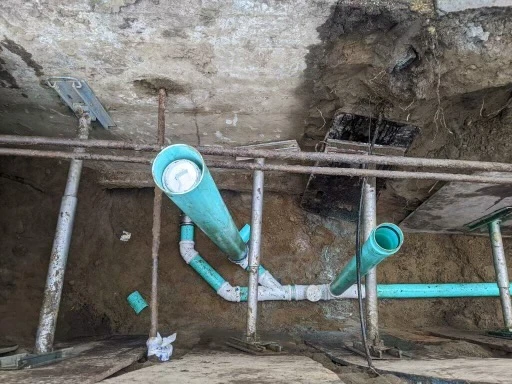
Pipe has collapsed or lost structural integrity. If the pipe has caved in or is so severely deteriorated that it cannot support a liner, rehabilitation is not possible. The old pipe must be removed and a new one installed.
Significant belly or slope failure. When a pipe has lost its proper grade due to soil settling or ground movement, no amount of lining will restore flow. A sagging pipe will continue to collect debris and backup regardless of its interior condition. Full replacement corrects the slope.
Upsizing requirements. If you are adding fixtures, expanding a building, or increasing flow capacity, and the required diameter exceeds what the current pipe can accommodate through lining, full replacement allows you to install whatever size meets your needs.
Multiple bends with severe deformations. While CIPP can navigate bends, Wikipedia notes that the most common liner materials do not go around bends well without wrinkling and may not maintain roundness going around corners. Severe deformations or sharp angle changes may prevent proper liner installation.
Heavily congested underground utilities. In some situations, nearby gas lines, water mains, or electrical conduits make it unsafe to use pipe bursting, which relies on fracture force that could damage adjacent infrastructure. Full excavation with careful hand-digging provides better control in these conditions.
| Property Type | Recommended Approach | Key Considerations |
|---|---|---|
| Residential – single family | Trenchless lining for most repairs | Preserves lawns, driveways, and landscaping; minimal inconvenience for homeowners |
| Residential – multi-unit | Trenchless lining or bursting | Reduces disruption to tenants; faster project completion keeps units operational |
| Commercial | Trenchless for speed, full replacement for capacity | Minimize business downtime; upsizing may require excavation |
| Municipal / Public Infrastructure | Trenchless for most lateral and main repairs | Recognized by international plumbing codes; lower social and environmental costs |
| Industrial | Assessment-dependent | Chemical exposure and high-temperature requirements may dictate material choice and method |
Choosing a qualified sewer and drainage contractor for trenchless work matters just as much as choosing the right method. Here are indicators that you are working with a provider worth trusting.
They start with a camera inspection. Any reputable provider will run a video camera through your line before recommending a repair method. This inspection should be recorded and shared with you, showing the exact location and nature of the damage. Providers who quote a method without seeing the pipe first are guessing.
They explain why one method over another. A good contractor will walk you through the footage, point out the specific issues, and explain why trenchless repair or full replacement is the appropriate solution for your situation. They should also be honest about when trenchless will not work.
They discuss code requirements. As noted by the International Code Council, pipe bursting is referenced in Section 716 of the IPC for pipes up to six inches, and relining is referenced in Section 717. A knowledgeable contractor will work within these standards and ensure the final result passes inspection.
They provide post-repair verification. After completing a CIPP installation, the provider should flush the system, perform a flow test, and run a follow-up camera inspection to confirm the liner cured properly and all lateral connections were reinstated. This verification step is non-negotiable for quality workmanship.
Determining whether trenchless pipe repair or full replacement is right for your situation starts with a thorough camera inspection and honest assessment from an experienced team. At All Drain Solutions, we evaluate every line on its actual condition and recommend the method that provides the longest-lasting, most cost-effective result for your specific property. Our technicians use the latest trenchless technology and follow established plumbing codes to deliver repairs you can count on for decades.
Request a Free Estimate from our team to get a detailed assessment and straightforward pricing, or Schedule a Camera Inspection by calling us directly at (206) 899-7764. We are here to help you make the right call for your pipes and your property.
Based on peer-reviewed research published in Frontiers in Water, CIPP lining has a standard life expectancy of approximately 50 years, with some installations exceeding that figure when properly installed and maintained.
Trenchless rehabilitation works on most common pipe materials including clay, cast iron, PVC, Orangeburg, and concrete. However, the existing pipe must retain enough structural shape to support the liner, as confirmed by camera inspection before any work begins.
Yes. The International Plumbing Code references pipe bursting in Section 716 and relining of building sewers and drains in Section 717, with similar references in the International Residential Code, according to the International Code Council.
CIPP lining does reduce the interior diameter slightly because the new liner fits inside the existing pipe. The reduction is typically small, and in many cases the smoother interior surface improves flow enough to offset the smaller diameter. Pipe bursting, by contrast, can install the same or a larger diameter.
If camera inspection reveals that the pipe has collapsed, lost its slope, or is too deformed for a liner, our team will recommend full excavation and replacement. We always base our recommendation on the actual condition of the line rather than assuming one method fits every situation.