

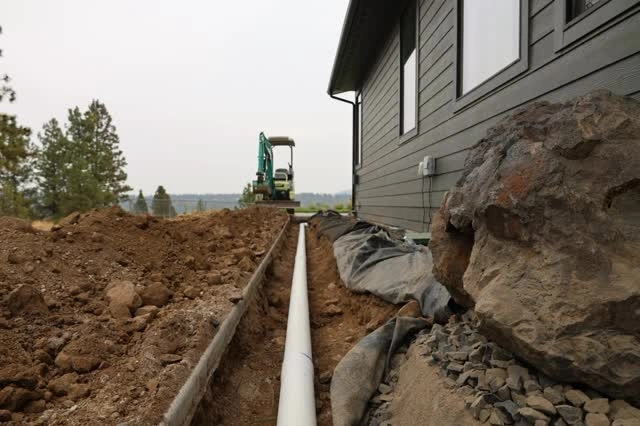
Professional drainage solutions protect your foundation in Tacoma, WA by managing the roughly 40 inches of annual precipitation that falls on a region dominated by poorly drained glacial soils and persistent winter wetness. Without proper drainage, water accumulates around your foundation, building hydrostatic pressure that forces moisture through concrete, cracks masonry, and erodes the bearing soil beneath footings. The right drainage strategy depends on your property’s terrain, soil type, and the age and construction of your home, ranging from simple surface grading corrections to full perimeter drain systems installed at the footing level.
Tacoma sits on geology shaped by the Vashon glaciation, a complex sequence of glacial till, recessional outwash, and lacustrine clay deposits. The USDA Natural Resources Conservation Service classifies the Tacoma, WA soil series as very deep, very poorly drained soils formed in alluvium on tidal flats, flood plains, and deltas. These soils are saturated with water and have a water table near the surface during winter months and wet periods throughout the year unless they have been artificially drained. With a mean annual precipitation of about 40 inches and moderately slow permeability, water does not move through these soils quickly on its own.
What this means for homeowners is straightforward: rain that falls on your property does not efficiently drain away. It pools, it sits, and it percolates slowly toward the lowest point it can find, which is often alongside your foundation. The Washington State Residential Code addresses this reality by requiring that lots be graded to drain surface water away from foundation walls, with the grade falling not fewer than 6 inches within the first 10 feet. When the existing soil or terrain makes this impossible, the code mandates constructed drains or swales to ensure water moves away from the structure.
For older Tacoma homes, especially those built before modern drainage codes, these conditions often were not addressed during construction. The result is decades of water quietly working against the foundation.
Understanding the damage mechanism helps you recognize why proven drain cleaning methods matter. Water threatens foundations in three primary ways:
Hydrostatic pressure. When saturated soil surrounds a foundation wall, the weight of that water-bearing soil exerts inward pressure on the concrete. This force can push water through the concrete itself, through joints between wall sections, and through any cracks that develop. Over time, the pressure can bow or deflect basement walls inward.
Soil expansion and contraction. Clay-rich soils absorb water and swell, then shrink as they dry. This cycle repeats with every wet season. As foundation engineering principles explain, differential settlement occurs when one area of soil beneath a foundation moves more than another. Expansive clay is one of the most common causes of this differential movement, leading to cracks in walls, uneven floors, and doors and windows that no longer close properly.
Erosion of bearing soil. Water flowing along or beneath footings can wash away the fine particles in the soil that provide structural support. As bearing capacity decreases, the foundation settles, sometimes unevenly. This is particularly dangerous on hillside lots where concentrated water flow can undermine footings entirely.
A professional drainage plan typically combines multiple solutions tailored to your specific site. Here is a comparison of the primary drainage types used to protect foundations in the Tacoma area:
| Drainage Type | How It Works | Best For | Typical Application |
|---|---|---|---|
| Surface grading | Re-shapes the ground slope to direct water away from foundation | All properties, first line of defense | Correcting negative grade, building code compliance |
| French drain (exterior) | Perforated pipe in gravel trench alongside footing, intercepts groundwater | High water table, persistent wet soil | New construction or full excavation retrofit |
| Curtain drain | Subsurface perforated pipe installed uphill, intercepts water before it reaches foundation | Hillside lots, lateral groundwater flow | Intercepting subsurface flow from slopes |
| Surface/channel drain | Grated trench at ground level collecting runoff at hardscape transitions | Flat lots, paved areas near foundation | Driveways, patios, walkways directing water to foundation |
| Gutter and downspout extension | Roof water collection and discharge 10+ feet from foundation | All properties with roof drainage | Preventing concentrated roof runoff from saturating soil near walls |
| Rain garden / dry well | Depressed landscaping or gravel pit that absorbs and filters runoff | Properties with space and suitable soil percolation | Managing downspout discharge, reducing peak runoff volume |
French drains are among the most widely used foundation protection systems. A French drain consists of a trench filled with gravel or rock containing a perforated pipe that redirects both surface water and groundwater away from a building foundation. They are primarily used to prevent ground and surface water from penetrating or damaging building foundations, and are commonly installed in two configurations around a home: buried around the exterior side of the foundation wall at the footing level, or installed underneath the basement floor on the inside perimeter.
In Tacoma’s poorly drained soils, an exterior French drain at the footing level is often the most effective defense because it intercepts groundwater before it reaches the foundation wall. The system collects water through the perforations in the pipe, channels it along the trench slope, and discharges it to daylight (a safe downhill outlet), a storm sewer connection, or a dry well. Modern installations include geotextile filter fabric to prevent fine soil particles from entering and clogging the gravel envelope.
Rain gardens serve as an effective companion to subsurface drainage. According to Wikipedia’s overview of rain gardens, these are designed landscape sites that reduce the flow rate, total quantity, and pollutant load of runoff from impervious urban areas like roofs, driveways, and compacted lawns. Research from the Puget Sound region, including the 12,000 Rain Gardens campaign for Puget Sound, has demonstrated that properly designed rain gardens can achieve a 75 to 80 percent reduction in stormwater runoff during regular rainfall events.
For Tacoma homeowners, rain gardens are particularly useful for managing downspout discharge. Rather than dumping concentrated roof runoff next to the foundation, downspouts are extended to feed a rain garden positioned at least 10 feet from the house. The garden’s engineered soil mix, typically 60 percent sand, 20 percent compost, and 20 percent topsoil, absorbs and filters the water, reducing the volume that reaches the soil surrounding the foundation.
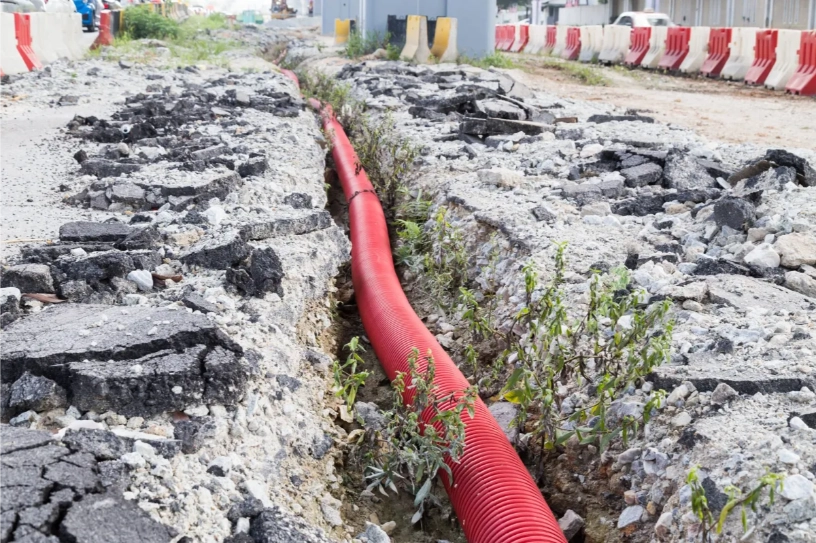
Early detection prevents expensive repairs. Watch for these indicators:
The right approach varies depending on your property’s characteristics:
| Property Situation | Recommended Drainage Approach | Key Considerations |
|---|---|---|
| Flat lot, older home, no existing drainage | Full exterior French drain system combined with gutter extensions and surface re-grading | Likely requires excavation to footing level; address code-compliant grading |
| Hillside lot with lateral water flow | Curtain drain installed uphill combined with surface grading | Intercept subsurface flow before it reaches the foundation; evaluate slope stability |
| New construction | Integrated system: exterior footing drain, proper 6-in-10-ft grading, gutter extensions, and optional rain garden | Design drainage during construction phase, far less disruptive than retrofit |
| Home with basement, high water table | Exterior French drain at footing with sump pump backup and interior perimeter drain | May require both interior and exterior systems for full protection |
| Slab-on-grade home with crawlspace | Surface grading correction, gutter management, and crawlspace vapor barrier | Address crawlspace moisture with sealed ground cover per code requirements |
Choosing a qualified drainage contractor matters as much as choosing the right system. Look for these qualities:
All Drain Solutions provides professional drainage assessments and installation for homeowners throughout Tacoma, WA. Our team evaluates your property’s unique soil conditions, grading, and water flow patterns to recommend and install the drainage systems that will protect your foundation for the long term. Contact us at [email protected] or call (253) 200-0451 to discuss your situation.
Request a Free Quote | Schedule an Inspection
Look for water pooling near the foundation after rain, damp basement walls, efflorescence on concrete, cracks in walls or floors, and doors or windows that stick. Any of these signs warrant a professional drainage assessment.
A French drain is a subsurface system with a perforated pipe in a gravel trench that intercepts groundwater below the surface. A surface drain is a grated channel at ground level that captures visible runoff before it can reach the foundation.
Yes. Persistent water against foundation walls creates hydrostatic pressure that can bow walls, force water through concrete, erode bearing soil beneath footings, and cause expansive clay soils to swell and contract, leading to differential settlement and cracking.
It depends on the scope of work. Surface grading corrections and gutter extensions typically do not require permits, but subsurface drainage systems involving trenching near the foundation may require permits through the City of Tacoma. A qualified contractor can help you determine what applies.
A properly installed French drain with quality filter fabric, correct gravel gradation, and a solid discharge point can function effectively for 20 to 30 years before sediment buildup may require cleaning or replacement.