
You flush a toilet, pull the plug on a sink, and the water disappears. Most of us never think twice about what happens next. But beneath every home and business runs a complex network of pipes, pumps, and treatment systems that keeps our communities safe, clean, and functional. When something goes wrong, though, that invisible system makes itself known fast, and usually at the worst possible time.
This guide is built from years of hands-on experience diagnosing and repairing drainage problems across all types of properties. We have seen what works, what fails, and what property owners can do to stay ahead of costly surprises. Whether you own a single-family home, manage a restaurant, or oversee a multi-unit commercial building, understanding how your sewer and drain system works, what threatens it, and how to maintain it will save you money, time, and stress for years to come.
Every drain in your home, from the kitchen sink to the shower to the toilet, connects to a network of pipes that carries wastewater away. According to the U.S. Environmental Protection Agency, sewers collect sewage and wastewater from homes and businesses and deliver it to treatment facilities before it is discharged to water bodies or land. In a typical residential setup, wastewater flows from individual fixtures into branch drains, which then connect to a larger main drain line that exits your property and ties into the municipal sewer system or a private septic system.
The system relies primarily on gravity to move wastewater. Pipes are angled downward at a slight slope, allowing water to flow naturally. When gravity is not enough, like in basements or properties below street level, ejector pumps and lift stations push wastewater uphill to reach the main line.
These two terms are often used interchangeably, but they refer to different parts of the system. Drains are the pipes and fixtures inside and immediately around your property that collect and carry wastewater away from specific sources. Sewers are the larger pipes and public infrastructure that receive wastewater from many properties and transport it to treatment facilities.
Think of drains as the veins in your property and sewers as the arteries that connect your property to the broader municipal system. Understanding this distinction matters because the responsibility for maintenance differs. Homeowners are typically responsible for the drain and lateral lines on their property, while the municipality handles the main sewer lines in the street.
Not every property connects to a public sewer. The University of Michigan Center for Sustainable Systems reports that around 19% of U.S. households depend on septic systems rather than public sewers, discharging over 4 billion gallons of wastewater below ground every day.
Septic systems treat wastewater on-site through a combination of a septic tank (where solids settle and begin to break down) and a drain field (where liquids are filtered through soil). Municipal sewer systems, by contrast, carry wastewater through underground pipes to a centralized treatment plant where it goes through multiple stages of cleaning before being released back into the environment. Both systems require regular maintenance, but the types of services and the responsibility for upkeep differ significantly.
The public side of the system is enormous. The U.S. has over 17,000 publicly owned treatment works and roughly 1.9 million miles of piping providing collection, treatment, and disposal services to more than 270 million people. This infrastructure carries wastewater from lateral connections to treatment plants through a combination of gravity-fed pipes, pump stations, and force mains.
The TriCo Regional Sewer Utility, a municipal provider in Indiana, explains the process clearly: wastewater enters your lateral line, travels to the main sewer line under the street, gets carried by gravity or pumping stations to a treatment plant, then passes through screening, primary treatment (settling solids), secondary treatment (biological breakdown), and tertiary treatment (disinfection) before being safely discharged.
Expert Tip: If you are buying a home, always find out whether it connects to a municipal sewer or a private septic system. The maintenance responsibilities and long-term costs are very different, and knowing upfront helps you budget accordingly.
Key Takeaways
Understanding what goes wrong, and why, is the first step to protecting your property. Drain and sewer issues generally fall into a few broad categories.
Clogs are the single most common drain problem we encounter. They develop gradually as debris builds up inside pipes, reducing flow until water backs up completely.
In kitchens, the main culprit is FOG (fats, oils, and grease). When you pour cooking grease down the drain, it may be liquid at first but solidifies as it cools, coating the inside of pipes and catching food particles. Over time, this creates a hardened blockage that chemical drain cleaners cannot dissolve.
In bathrooms, hair combines with soap scum and toothpaste residue to form dense clogs in sink and shower drains. These materials wrap around each other and cling to pipe walls, progressively narrowing the opening.
In toilets, the problem is usually inappropriate items being flushed. Even products marketed as “flushable” (like wipes and feminine hygiene products) do not break down the way toilet paper does and frequently cause blockages deep in the drain line.
Tree roots are one of the most destructive forces acting on underground sewer pipes. Roots are naturally drawn to the moisture and nutrients inside sewer lines. They enter through tiny cracks, joints, or loose connections, and once inside, they grow and expand, creating dense root masses that trap debris and completely block flow.
This problem is especially common in older neighborhoods with mature trees and clay or concrete pipes that have deteriorated over decades. Root intrusion rarely stays confined to a small area. If left untreated, roots can exert enough pressure to crack or collapse pipes entirely.
Pipes do not last forever. Different materials have different lifespans:
As pipes age, they corrode, crack, bell, and collapse. Corroded cast iron pipes, for example, develop rough interiors that catch debris and accelerate clogging. Cracked pipes allow groundwater and soil to infiltrate, which not only causes blockages but also reduces the capacity of the entire system. In severe cases, collapsed pipe sections create complete blockages that require emergency repair.
A sewer backup occurs when wastewater flows backward into your home instead of draining away. This is one of the most destructive and hazardous plumbing emergencies a property owner can face. Backups can be caused by clogs in your lateral line, problems in the municipal main, or during heavy rainfall when stormwater overwhelms the sewer system.
According to the EPA, sanitary sewers that are not watertight can receive large amounts of infiltration and inflow during wet weather, causing sanitary sewer overflows. While overflows are a municipal concern, the same pressure that causes overflows can force sewage back up through your drains and fixtures.
The problems facing individual properties are part of a much larger national challenge. The American Society of Civil Engineers gave wastewater infrastructure a grade of D+ on its 2025 Report Card for America’s Infrastructure, unchanged from 2021. The report found that the sector’s renewal and replacement rate for large capital projects actually decreased from 3% to 2% over the past decade, while collection system failures increased from 2 to 3.3 per 100 miles of pipe.
WaterWorld Magazine, covering the same report, noted that the annual capital needs for wastewater and stormwater were $99 billion, while the funding gap was $69 billion, meaning only about 30% of the sector’s infrastructure capital needs are being met.
What does this mean for you? It means that aging public infrastructure puts additional stress on your private drain system. When main lines in the street have capacity issues or experience failures, your lateral line feels the effects.
Key Takeaways
Most drain and sewer problems give you plenty of warning before they become emergencies. Learning to recognize these signs early can save you from major damage and expensive repairs.
When one drain is slow, the clog is usually localized to that fixture. When multiple drains are slow simultaneously, especially if they are on different floors or different sides of the house, the problem is almost certainly in your main sewer line.
Bubbling or gurgling from drains when you flush the toilet or run water elsewhere means air is trapped in the pipes. This usually indicates a partial blockage that is preventing normal airflow through the system.
Sewer gas smells coming from drains or around your property suggest that the water seal in a drain trap has dried out, or that there is a crack or break in your sewer line allowing gases to escape. Persistent odors around your yard may indicate a broken sewer pipe underground.
Unexplained wet patches, lush patches of grass, or sinkholes in your yard, especially near where your sewer line runs, can indicate a leaking underground pipe. These should be investigated promptly because they can lead to soil erosion and foundation damage.
If the same drain clogs repeatedly even after you clear it, the blockage is deeper in the line or is being caused by a structural problem like root intrusion, pipe corrosion, or a sagging pipe (called a “belly”) that collects debris.
Water pooling around basement floor drains during dry weather usually means the municipal sewer is backing up or your lateral line is blocked downstream. This is a serious warning sign that should be addressed immediately.
Expert Tip: Keep a simple drain maintenance log. Note which drains are slow, when you notice odors, and when backups occur. This information helps our technicians diagnose problems faster and more accurately during a service call.
When we arrive at your property, the first step is always diagnosis. Over the years, drain and sewer work has evolved from guesswork to precision diagnostics thanks to specialized equipment.
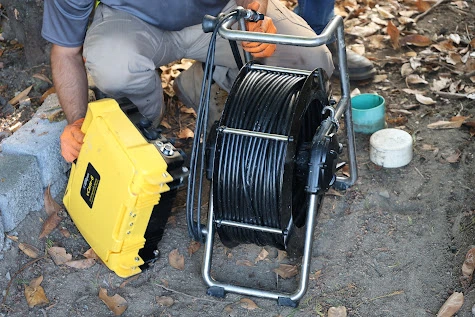
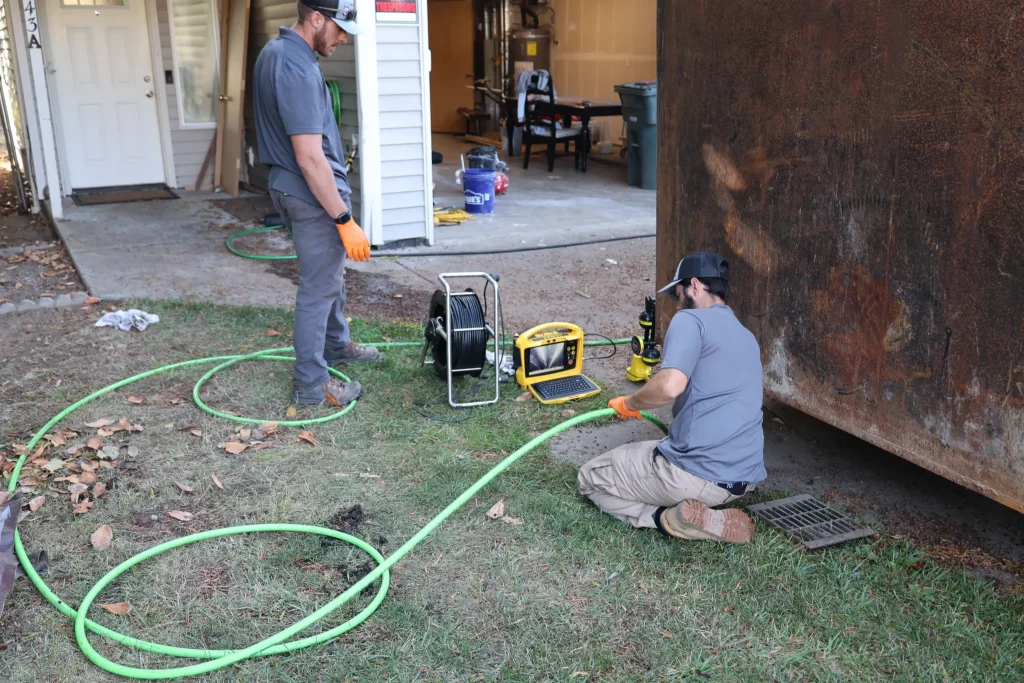
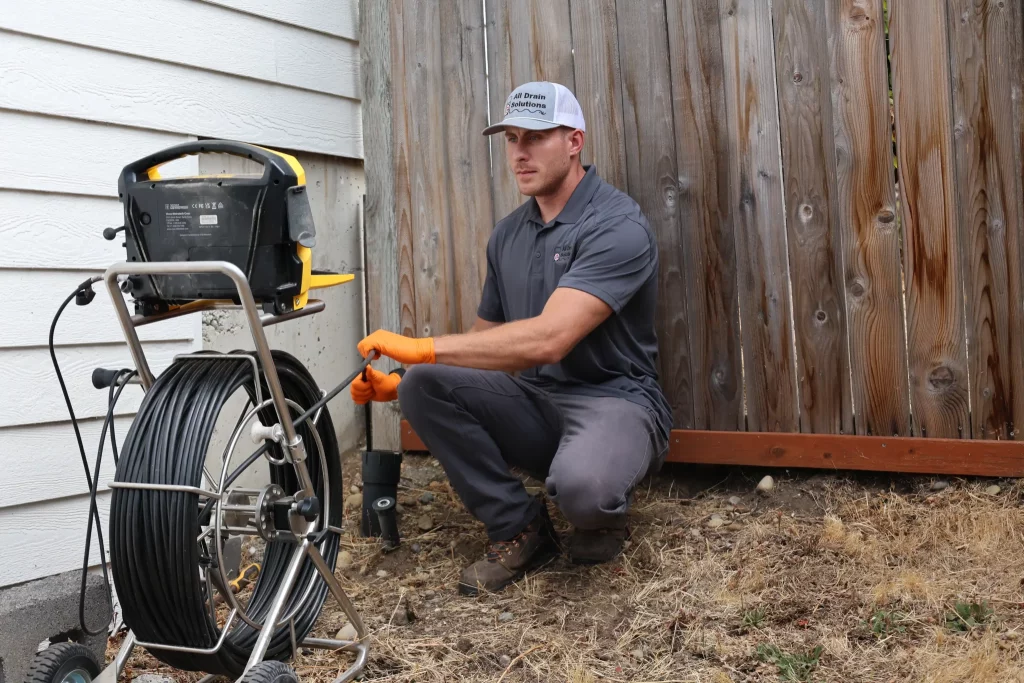
A sewer camera inspection is the single most important diagnostic tool in modern drain work. A waterproof, high-definition camera is mounted on a flexible cable and pushed through your pipes, transmitting real-time video to a monitor above ground. This allows us to see exactly what is inside your pipes: cracks, root masses, bellied sections, grease buildup, corrosion, collapsed sections, and more.
Camera inspections are recommended before any major cleaning or repair work because they tell us exactly what we are dealing with. Attempting to hydro-jet or cable a line without knowing its condition risks causing further damage to already-weakened pipes.
Hydro jetting uses a specialized nozzle that shoots high-pressure water (often 3,000 to 4,000 PSI) through the pipes. This pressurized stream scours pipe walls, cutting through grease buildup, mineral deposits, roots, and debris, and flushing everything downstream.
Hydro jetting is far more effective than traditional snaking for clearing heavy buildup. A cable snake punches a hole through a blockage, which can quickly close back up. Hydro jetting cleans the entire diameter of the pipe, restoring full flow capacity and leaving the walls clean enough that blockages take much longer to form again.
A drain snake, or cable auger, uses a rotating steel cable with a cutting head on the end to break through clogs. It is the go-to method for localized blockages in individual drain lines. Different head attachments are used for different types of clogs: cutting heads for roots, retrieving heads for solid objects, and spade heads for grease.
While effective for clearing immediate blockages, snaking does not clean the pipe walls the way hydro jetting does. For recurring problems or heavy buildup, hydro jetting is the better long-term solution.
When a camera inspection identifies an underground problem (like a cracked pipe or root intrusion), we use electronic locating equipment to pinpoint its exact position above ground. A transmitter is placed in the pipe at the problem spot, and a receiver on the surface detects the signal, allowing us to mark the precise location and depth for repair work. This means we can excavate exactly where needed, minimizing disruption to your yard, driveway, or landscaping.
For more complex situations, additional tools come into play. Smoke testing can identify where water is entering your sewer system through cracks or improper connections. Dye testing traces the path of water flow between fixtures and sewer connections. Pressure testing checks for leaks in specific pipe sections.
When a problem has been diagnosed, the right repair method depends on the type and severity of the issue, the pipe material, the location, and your budget.
Professional drain cleaning is the most common service we perform. It includes clearing clogs in kitchen sinks, bathroom drains, floor drains, laundry lines, and main sewer cleanouts. For routine maintenance and most blockages, this is the fastest and least invasive solution.
When a sewer line is damaged beyond what cleaning can fix, repair or replacement becomes necessary. There are two main approaches:
Traditional Excavation (Trench Repair)
This involves digging a trench to expose the damaged pipe section, removing and replacing it, then backfilling and restoring the surface. While disruptive to landscaping, hardscaping, and sometimes driveways, traditional excavation is sometimes the only option for severely collapsed pipes, pipes with major misalignments, or situations where trenchless methods are not feasible.
Trenchless Repair Methods
Trenchless technology allows us to repair or replace sewer lines with minimal excavation. These methods are generally faster, less disruptive, and often more cost-effective when you factor in the restoration costs of traditional digging.
Expert Tip: Always get a camera inspection before choosing a repair method. If your pipe is suitable for trenchless lining, you can often avoid tearing up your yard and save significantly on surface restoration costs. But lining is not right for every situation, and an honest assessment of your pipe’s condition is essential.
| Method | Best For | Disruption Level | Pipe Condition Required |
|---|---|---|---|
| Drain Cleaning | Clogs, routine maintenance | Minimal | Any |
| CIPP Pipe Lining | Cracks, root intrusion, joint gaps | Very Low | Pipe must be largely intact |
| Pipe Bursting | Collapsed, badly deformed pipes | Low to Moderate | Any (replaces entire pipe) |
| Spot Excavation | Single-point damage | Moderate | Any |
| Full Replacement | Extensively damaged lines | High | Any |
For properties on septic systems, our services include tank pumping, inspections, line jetting, drain field assessment, and system repairs. Septic systems require regular pumping every 3 to 5 years depending on household size and usage. Failing to pump on schedule leads to solids overflowing into the drain field, which can cause permanent and very expensive damage to the absorption system.
The best drain and sewer service is the one you never need. Preventive maintenance keeps your system functioning properly and catches small problems before they become emergencies.
What You Can Do Yourself:
What Needs Professional Attention:
Commercial properties face higher volumes and different types of waste, which means maintenance needs are more frequent and more specialized.
Restaurants and Food Service:
Grease is the number one enemy of commercial kitchen drains. Grease traps must be installed, maintained, and pumped on a regular schedule to prevent FOG from entering the sewer system. Many municipalities require regular grease trap inspections and impose fines for non-compliance. In addition to grease trap service, kitchen drain lines benefit from quarterly hydro jetting to keep buildup under control.
Office Buildings and Multi-Unit Properties:
High-traffic restrooms and break rooms mean more hair, soap, paper products, and food waste passing through the system. A quarterly or semi-annual drain cleaning schedule prevents disruptions that affect tenants, employees, and customers.
Industrial Facilities:
Industrial wastewater may contain chemicals, solids, or other materials that require specialized treatment, pretreatment, or handling. Facilities must comply with the EPA’s National Pretreatment Program, which sets discharge standards for industrial wastewater entering public treatment plants. Regular maintenance of pretreatment systems, interceptors, and drain lines is essential for compliance and smooth operations.
| Season | Maintenance Tasks |
|---|---|
| Spring | Inspect outdoor drains, clear winter debris from gutters and downspouts, schedule camera inspection for homes with trees near sewer lines |
| Summer | Clean kitchen drains more frequently (cooking increases), check for slow floor drains in basements during heavy rain |
| Fall | Remove leaves from outdoor drains, have septic tanks pumped before ground freezes, insulate exposed pipes |
| Winter | Run water periodically in unused drains to prevent trap seals from drying out, monitor for signs of freezing pipes, keep cleanout access clear of snow |
Expert Tip: Schedule preventive maintenance in the off-season. Our technicians have more availability in fall and winter, and you avoid the surge in emergency calls that come with spring rains and summer usage peaks.
While the basic principles are the same, the scale, frequency, and consequences of drain and sewer problems differ substantially between residential and commercial properties.
| Factor | Residential | Commercial |
|---|---|---|
| Usage Volume | Moderate, predictable | High, variable by business type |
| Drain Types | Kitchen, bath, laundry | Kitchen, restroom, floor, process, grease trap |
| Primary Threats | FOG, hair, roots, aging pipes | FOG, scale, debris, chemical exposure, heavy usage |
| Maintenance Frequency | Annual inspection, as-needed cleaning | Monthly to quarterly cleaning, scheduled service |
| Failure Consequences | Inconvenience, property damage | Business downtime, regulatory issues, lost revenue |
| Regulatory Requirements | Minimal (septic inspections) | Grease trap permits, pretreatment compliance, health codes |
For businesses, the cost of a drain emergency is not limited to the repair itself. A restaurant with a backed-up kitchen drain during the dinner rush loses revenue, risks health code violations, and damages its reputation. A hotel with non-functioning plumbing faces guest complaints and potential refunds. The preventive maintenance investment for commercial properties pays for itself many times over in avoided downtime.
Some drain issues can be handled with a plunger, a drain snake from the hardware store, or a basic enzymatic cleaner. But there are situations where professional help is necessary, and delaying will only make things worse.
Call a professional when:
Do not wait for a full emergency. If you are noticing any of these signs, a professional assessment can identify the problem and provide solutions before the situation escalates.
The health of your drain and sewer system directly impacts your comfort, your property value, and in the case of businesses, your revenue. The information in this guide gives you a solid foundation for understanding how these systems work, what threatens them, and how to keep them running smoothly.
Here are the most important steps you can take right now:
Bookmark this guide and refer back to it as questions come up. The more you know about your drainage system, the better decisions you will make about maintaining it.
Whether you are dealing with a stubborn clog, suspect tree root damage, or want to set up a preventive maintenance schedule for your home or business, All Drain Solutions is here to help. Our team brings professional diagnostic tools and years of field experience to every job. Reach out to us at (253) 200-0451 or send an email to [email protected] to discuss your situation or schedule a service appointment.
For most homes, a professional cleaning every 1 to 2 years is sufficient. Homes with mature trees near the sewer line or a history of clogs may benefit from annual cleaning. Commercial properties typically need quarterly or semi-annual service depending on usage.
Snaking uses a rotating cable to punch through a clog, while hydro jetting uses high-pressure water to clean the entire inside diameter of the pipe. Hydro jetting provides a more thorough, longer-lasting clean and is better suited for grease buildup and root intrusion.
Common signs include slow drains across multiple fixtures, frequent clogs that return after clearing, gurgling sounds from drains, and wet patches in your yard above the sewer line. A camera inspection is the only way to confirm root intrusion and assess the extent of the damage.
We do not recommend chemical drain cleaners. They often contain harsh chemicals that can damage older pipes, especially corroded cast iron. They also rarely clear blockages completely and can create hazardous conditions for anyone working on the pipes later. Mechanical clearing or hydro jetting is safer and more effective.
During heavy rainfall, excess stormwater can enter the sewer system through cracks in pipes or combined sewer overflows. This extra volume overwhelms the system’s capacity and can push wastewater back up through your drains. Installing a backwater preventer valve on your lateral line can help protect your home from this type of backup.
Most residential camera inspections take 30 to 60 minutes, depending on the length and condition of the line. The technician inserts the camera through a cleanout access point and runs it through the pipe while reviewing the video feed in real time. You receive a recording of the footage along with a detailed report of findings and recommendations.