
Slow drains are one of the most frequent plumbing complaints we see in Puyallup, WA homes, and they almost always signal a developing problem rather than a minor inconvenience. The most common causes include grease buildup from kitchens, hair and soap scum in bathroom drains, tree roots infiltrating underground sewer lines, and the local water table’s seasonal fluctuations that affect drainage performance throughout the Puyallup River Watershed. Professional diagnosis and repair typically involves video inspection, mechanical snaking, high-pressure water jetting, and in some cases trenchless pipe rehabilitation.
Understanding the local environment matters because Puyallup sits within the Puyallup River Watershed, a drainage basin that covers roughly 1,220 square miles across northern Pierce and southern King Counties. The USGS Puyallup River Watershed study reports that this area receives about 52 inches of precipitation per year, with roughly 41% of that water entering the groundwater system as recharge. Seasonal groundwater fluctuations in local wells range from less than 1 foot to about 32 feet depending on location and aquifer depth.
What this means for homeowners is that the water table beneath Puyallup properties rises and falls significantly throughout the year. During the wet season from October through March, the high water table can saturate the soil surrounding underground sewer lines and drainpipes. This added hydrostatic pressure can slow drainage, force water back through small pipe cracks, and create conditions where even a partial blockage becomes noticeable. Homes in low-lying areas near the Puyallup, White, and Carbon Rivers are especially susceptible.
On top of that, the Seattle-Tacoma region (measured at Sea-Tac Airport, just miles from Puyallup) averages 39.3 inches of precipitation annually, with November, December, and January accounting for roughly half of that total. Atmospheric river events can deliver 4 to 5 inches of rainfall in a single 24-hour period and are a leading cause of major flooding along the Puyallup River. When the ground is already saturated from weeks of rain, excess stormwater infiltrates sewer systems through cracked pipes and compromised joints, compounding drainage problems inside the home.
Grease from kitchens is the number one enemy of household drain systems. The EPA reports that grease from restaurants, homes, and industrial sources is the most common cause of reported sewer blockages, responsible for approximately 47% of all reported cases. When cooking fats, oils, and grease are poured down the drain, they may be warm enough to flow through pipes initially, but they cool and solidify as they move through the plumbing system. Over time, these deposits accumulate on pipe walls, narrowing the passage and slowing water flow.
In Puyallup homes, this problem often starts in the kitchen sink and gradually affects the main sewer line as the buildup progresses downstream. Many homeowners believe that running hot water and dish soap dissolves grease, but according to Clemson University Extension, hot water and soap do not eliminate FOG because it will eventually reform and solidify farther down the pipe. The result is a progressively worsening slow drain that eventually leads to a complete backup.
For homes with mature landscaping or properties near established trees, root intrusion is a persistent threat to underground drain lines. Research published by the US Forest Service found that roots cause more than 50% of all sewer blockages. Tree roots are naturally drawn to the moisture and nutrients inside sewer pipes, and they exploit even the smallest cracks, joints, or fittings in pipe walls. Once inside, roots grow and expand, catching debris and grease as wastewater flows past. This transforms a minor crack into a significant obstruction.
The US Forest Service study notes that factors contributing to damage include old pipes with joints, shallow pipes, small-dimension pipes, and fast-growing tree species. In Puyallup neighborhoods with older homes dating back several decades, clay or concrete sewer lines with bell-and-spigot joints are especially vulnerable. Root intrusion in these lines can cause repeated blockages that return months after a homeowner attempts a DIY fix.
Bathroom drains face a different set of challenges. Hair catches on pop-up stoppers, drain crossbars, and the rough interior walls of older pipes. Combined with soap scum, which forms when soap reacts with minerals in the water supply, hair creates dense mats that restrict flow. In homes with multiple occupants using the same shower or bathroom sink, this buildup accelerates quickly.
Unlike grease, which primarily affects kitchen lines and the main sewer, hair and soap scum tend to localize in individual branch drains. This means one bathroom may have a slow drain while others function normally. Our technicians frequently find that simply removing the stopper assembly and cleaning the visible buildup is not enough. The blockage often extends several feet down the pipe where it requires a mechanical cable or auger to reach.
Aging infrastructure is a significant factor in Puyallup, where many neighborhoods have underground sewer lines installed 40 to 60 years ago. Pipes can crack from ground settling, freeze-thaw cycles, or the natural degradation of materials like cast iron, clay, and Orangeburg. When a pipe sags, cracks, or collapses, wastewater pools in the low spots and flows sluggishly. Over time, these areas collect debris and become chronic blockage points.
Signs of structural damage include recurrent slow drains that return shortly after clearing, gurgling sounds from multiple fixtures, and wet spots or unusually lush vegetation in the yard above the sewer line. Video camera inspection is the only reliable way to confirm structural damage and pinpoint the exact location of the problem.
As noted in the USGS groundwater study of the Puyallup River Watershed, seasonal water table fluctuations in the area can reach 32 feet. When groundwater levels rise during the wet season, water can infiltrate underground sewer pipes through cracks, joints, or deteriorated connections. This infiltration overwhelms the pipe’s design capacity, reducing the speed at which wastewater drains from the home. Homeowners often notice that slow drain problems worsen during heavy rain periods and improve during the dry summer months. This seasonal pattern is a strong indicator that stormwater infiltration is contributing to the issue.
| Cause | Primary Location | Worsens in Wet Season | DIY Fixable |
|---|---|---|---|
| FOG buildup | Kitchen sink to main line | No | Rarely |
| Tree root intrusion | Main sewer line | Yes | No |
| Hair and soap scum | Bathroom drains | No | Sometimes |
| Structural pipe damage | Underground sewer line | Yes | No |
| Stormwater infiltration | Main sewer line | Yes | No |
Our diagnostic process follows a systematic approach that narrows down the cause before any repair work begins.
1. Initial Assessment and History Review
We start by asking specific questions. Which drains are slow? When did the problem start? Does it worsen after heavy rain? Have there been previous backups or repairs? The answers help us determine whether the issue is isolated to one fixture or involves the main sewer line.
2. Visual Inspection of Accessible Drains
Our technicians remove drain covers, pop-up stoppers, and cleanout plugs to inspect for visible hair, soap buildup, and standing water. If the blockage is within the first few feet of the drain opening, it can often be cleared on the spot.
3. Video Camera Inspection
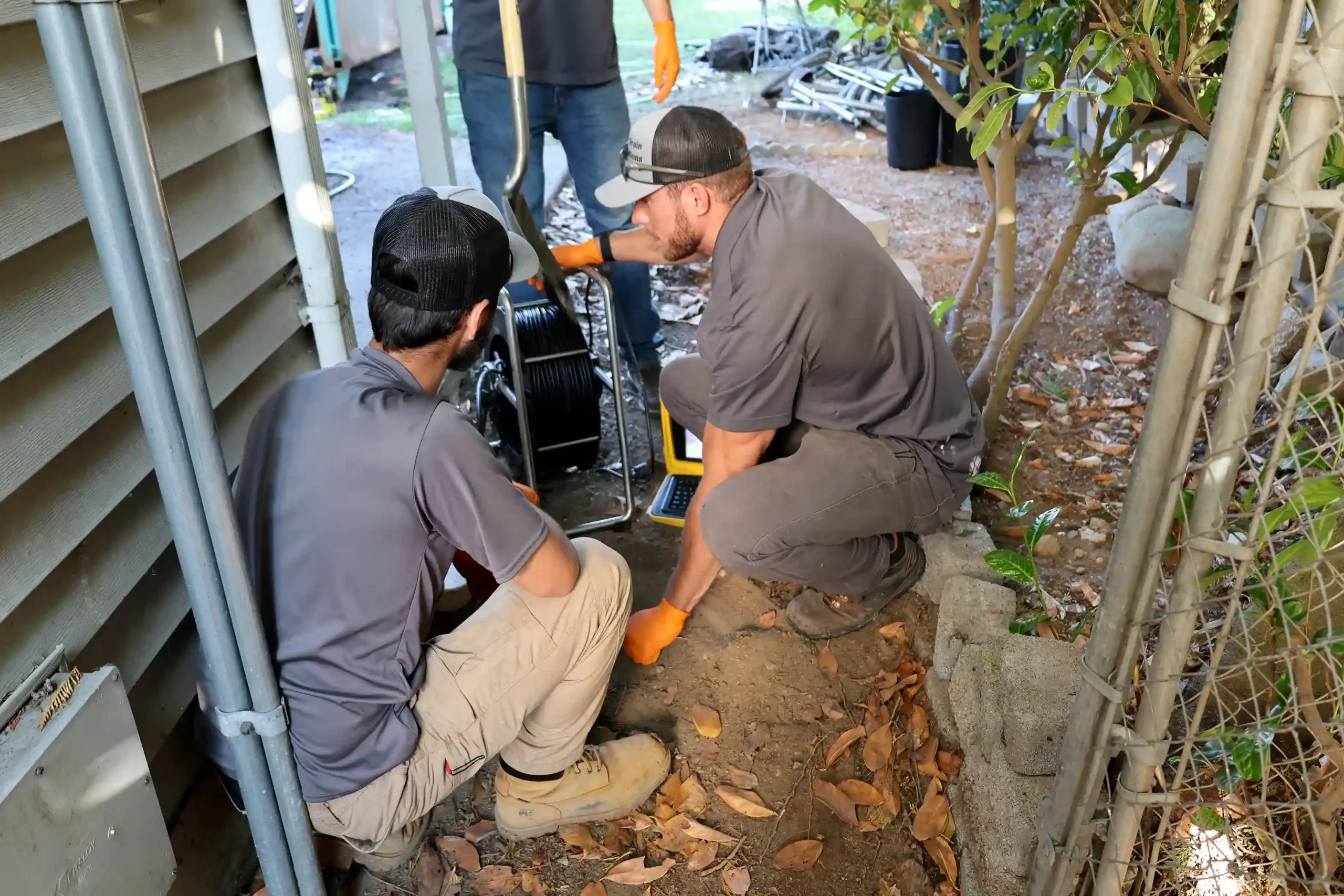
For deeper or recurring problems, we run a waterproof video camera through the sewer line. This allows us to see the exact condition of the pipe interior, identify blockages, locate cracks or root intrusion points, and measure the distance from the cleanout to the problem area. Video inspection is the single most important diagnostic step for underground sewer line issues.
4. Water Flow Testing
We may run water through the affected fixtures while monitoring drainage speed to determine the severity of the restriction. If multiple fixtures drain slowly simultaneously, this points to a main sewer line blockage rather than an individual branch drain issue.
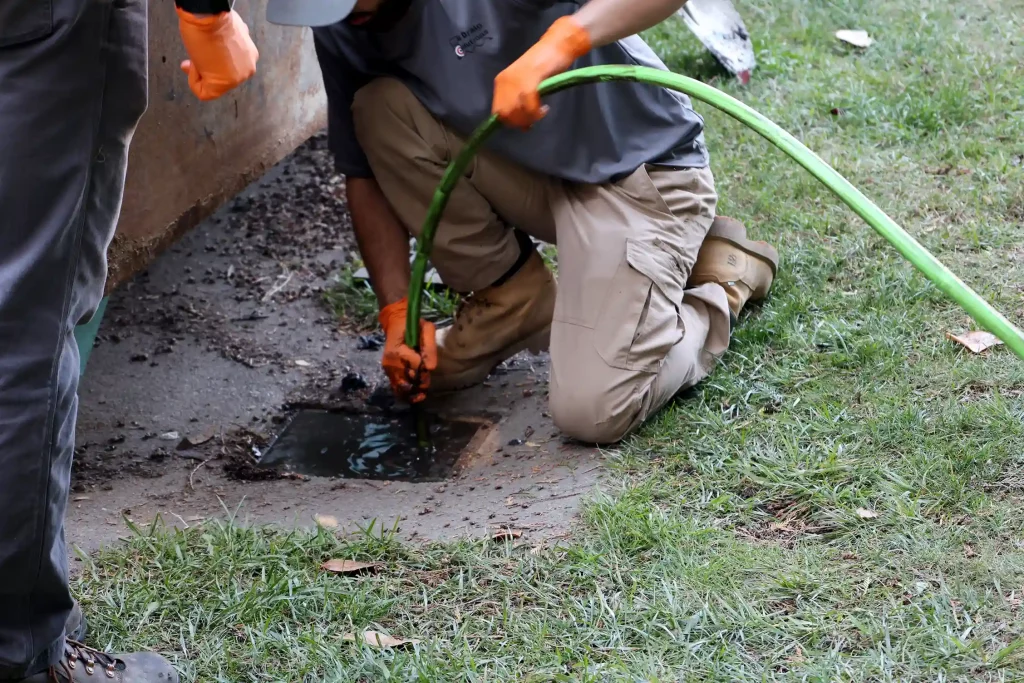
For most localized blockages caused by hair, soap scum, or small grease accumulations, our technicians use motorized drain snakes equipped with cutting heads. The cable rotates through the pipe, breaking up obstructions and restoring flow. This method is effective for branch drains serving individual sinks, showers, and tubs.
For main sewer line blockages, we use larger-diameter cables with heavier cutting heads designed to cut through root masses and compacted debris. In smaller-dimension pipes, root removal every year or every other year is common according to the US Forest Service research.
When grease, soap scum, and mineral deposits coat the interior walls of pipes, mechanical snaking may punch a hole through the blockage but leave behind a significant layer of buildup. High-pressure water jetting solves this by sending a stream of water at extreme pressure through the pipe, scouring the walls and flushing away the accumulated material. This method is particularly effective for FOG-related blockages and for restoring full pipe diameter after years of gradual buildup.
When root intrusion is confirmed through video inspection, our technicians cut through the root mass with specialized cutting heads. However, cutting the roots is only a temporary fix if the pipe remains cracked. For long-term solutions, we recommend trenchless pipe lining, which creates a new seamless pipe within the damaged one. This eliminates the cracks and joints that roots originally exploited and restores the pipe to full structural integrity without the disruption of traditional excavation.
For homes in Puyallup with a history of recurring drain problems, we recommend scheduled maintenance that includes annual or semi-annual drain cleaning methods and periodic video inspections. Preventive maintenance catches buildup before it becomes a full blockage and is far less disruptive than emergency service calls.
| Scenario | Home Type | Problem | Solution | Outcome |
|---|---|---|---|---|
| Recurring kitchen backup | 1970s rambler near downtown Puyallup | FOG buildup in main sewer line | High-pressure water jetting of entire sewer line | Full flow restored, kitchen drains normally |
| Wet season gurgling | 1990s two-story in South Hill | Tree roots entering cracked clay sewer line | Root cutting followed by trenchless pipe lining | No recurrence, problem resolved for long term |
| Shower drain slow | 2000s townhome | Hair and soap scum in 2-inch drain | Mechanical snaking with cutting head | Immediate improvement, drains normally |
| Multiple drains slow after rainstorm | 1960s single-family near Puyallup River | Stormwater infiltration through deteriorated pipe joints | Video inspection and spot pipe repair at two joint failures | Seasonal slow drainage eliminated |
| Occasional backup with no pattern | 1980s home with large trees | Roots colonizing bell-and-spigot clay joints | Annual root cutting with preventive maintenance plan | Manageable with scheduled visits |
While professional service is often necessary, there are several things Puyallup homeowners can do right away to reduce the frequency and severity of slow drains:
1. Never pour grease down any drain. Allow cooking fats and oils to cool, then scrape them into a sealed container and dispose of them in household trash. This single habit prevents the leading cause of sewer blockages.
2. Use drain screens on all bathroom fixtures. Hair catchers on shower and tub drains capture the most common bathroom blockage material before it enters the pipe.
3. Run hot water after each use of the kitchen sink. While hot water does not dissolve grease, maintaining warm water flow through the system helps prevent fresh grease from solidifying immediately at the drain opening.
4. Schedule an annual drain inspection. For homes with mature trees or older sewer lines, a yearly video inspection catches small problems before they become costly emergencies.
5. Pay attention to seasonal patterns. If slow drains consistently worsen during the rainy season, report this pattern to your drain technician. It helps narrow the diagnosis to stormwater infiltration or groundwater-related pressure issues.
Several local and property-specific variables influence how often and how severely slow drains develop:
All Drain Solutions is the local team Puyallup homeowners trust for slow drain diagnosis and repair. Our licensed technicians use video camera inspection, high-pressure jetting, and trenchless repair technology to get your drains flowing properly again, no matter the cause. Whether you are dealing with a single slow shower drain or a recurring main sewer line backup, we handle every job with the right tools and straightforward pricing.
📞 Call us at (253) 200-0451 or email [email protected] to schedule your service today.
Request a Free Quote | Schedule a Drain Camera Inspection
Grease buildup from cooking fats, oils, and grease (FOG) is the most common cause, responsible for 47% of reported sewer blockages according to EPA data. Hair and soap scum in bathroom drains are a close second.
Yes. The US Forest Service reports that tree roots cause more than 50% of all sewer blockages, especially in older pipes with joints, cracks, or fittings that allow roots to enter.
The Puyallup River Watershed receives about 52 inches of precipitation annually, and seasonal groundwater fluctuations can reach 32 feet. Rising water tables and stormwater infiltration through cracked pipes reduce drainage capacity during wet months.
Chemical cleaners rarely solve the actual blockage and can damage older pipes, especially cast iron and clay. They mask the problem temporarily and can make professional repair more difficult.
Homes with older sewer lines, mature trees, or a history of recurring problems benefit from annual or semi-annual professional cleaning and video inspection to catch issues early.