
When a sewer line fails in Puyallup, the damage spreads fast. Raw sewage backs up into drains, foul odors fill the home, and every minute of delay adds to the cleanup and restoration burden. Emergency sewer repair addresses these urgent situations by diagnosing the cause, stopping the damage, and restoring flow as quickly as possible. The right repair approach depends on what caused the failure, the condition and material of the pipe, and how quickly the problem is escalating. According to Pierce County Sewer Utility, understanding the most common causes and available solutions helps property owners make faster, better decisions when a sewer emergency hits.
Puyallup carries a specific infrastructure liability that many newer communities do not. According to the City of Puyallup’s Utility Rate Study, many of the existing stormwater and sewer pipes in the city, particularly in the downtown region, were installed prior to 1954 and have reached the end of their life cycle. The city’s own assessment identifies more than 35 miles of sewer pipe in red-coded age categories, meaning they are at the highest risk for breaks and failure.
The city has already responded to emergency repairs on critical sewer lines, including failures on 9th Ave. SW and along River Road. These situations demonstrate how aging infrastructure translates directly to real-world property damage. When a public main fails, surrounding properties often experience sewage backups even though the problem originated in the municipal system. For homeowners and businesses connected to these older mains, the risk of a sudden sewer emergency is measurably higher than in areas with newer infrastructure.
Emergency sewer repairs in the public system cost 30 to 40 percent more than planned, scheduled replacements. This same economics principle applies to private sewer laterals: waiting until a pipe fails before addressing it always results in a more expensive, more disruptive outcome than proactive maintenance or planned rehabilitation.
Tree roots seek out moisture and nutrients, and sewer pipes provide a reliable source of both. Roots enter through joints, cracks, and small openings in the pipe, then grow and expand inside the line. Over time, roots can completely block the pipe, crack it apart from the inside, or create a tangled mass that traps grease, debris, and wipes. Properties with mature landscaping, particularly older neighborhoods in Puyallup near downtown, face the highest risk. Root intrusion is the most common cause of repeated sewer backups in properties with clay or concrete pipes.
Homes built before the 1980s in Puyallup commonly have clay, cast iron, or in some cases Orangeburg (bituminized fiber) sewer pipes. Clay pipes are vulnerable to joint separation and cracking from ground movement. Cast iron corrodes from the inside out, developing rust deposits that narrow the pipe and eventually eat through the wall. Orangeburg, a compressed wood fiber product used from the 1940s through the 1970s, deforms and collapses under soil pressure over time. Each of these materials has a finite service life, and many Puyallup properties have pipes that have exceeded it by decades.
Puyallup’s geology includes areas with clay-heavy, expansive soils and properties built on or near hillsides. Soil expansion during wet seasons and contraction during dry periods creates pressure against underground pipes. This movement causes pipes to crack, joints to separate, and entire sections to offset or sag. Low spots that develop from ground shifting collect debris and eventually block completely. Frozen ground during winter months adds another layer of stress, particularly on older, brittle pipe materials.
Blockages caused by what goes down the drain account for a significant share of private sewer emergencies. Pierce County explicitly warns that products labeled as “flushable,” including cleaning wipes, baby wipes, and hygiene products, do not break apart like toilet paper and create persistent clogs in pipes that may already have grease buildup or root intrusion. Cooking fats, oils, and grease (FOG) compound the problem. FOG may be liquid when poured down the drain but solidifies as it cools inside the pipe, coating interior walls and trapping other debris until the line is fully blocked. Rinsing grease with hot water and detergent does not prevent this, according to Pierce County’s guidance, it simply moves the grease further down the pipe before it cools and hardens.
| Cause | Signs | Risk Level in Puyallup | Speed of Failure |
|---|---|---|---|
| Tree root intrusion | Slow drains, gurgling sounds, recurring backups | High in older neighborhoods | Gradual, then sudden blockage |
| Aging pipe materials | Frequent clogs, rust-colored water, sewage odor | Very high (pre-1980s construction) | Gradual deterioration |
| Ground shifting | Soggy yard spots, sunken ground, offset pipe joints | Moderate to high | Sudden crack or separation |
| Grease and debris blockages | Slow kitchen drain, backup after heavy water use | Moderate (preventable) | Can escalate quickly |
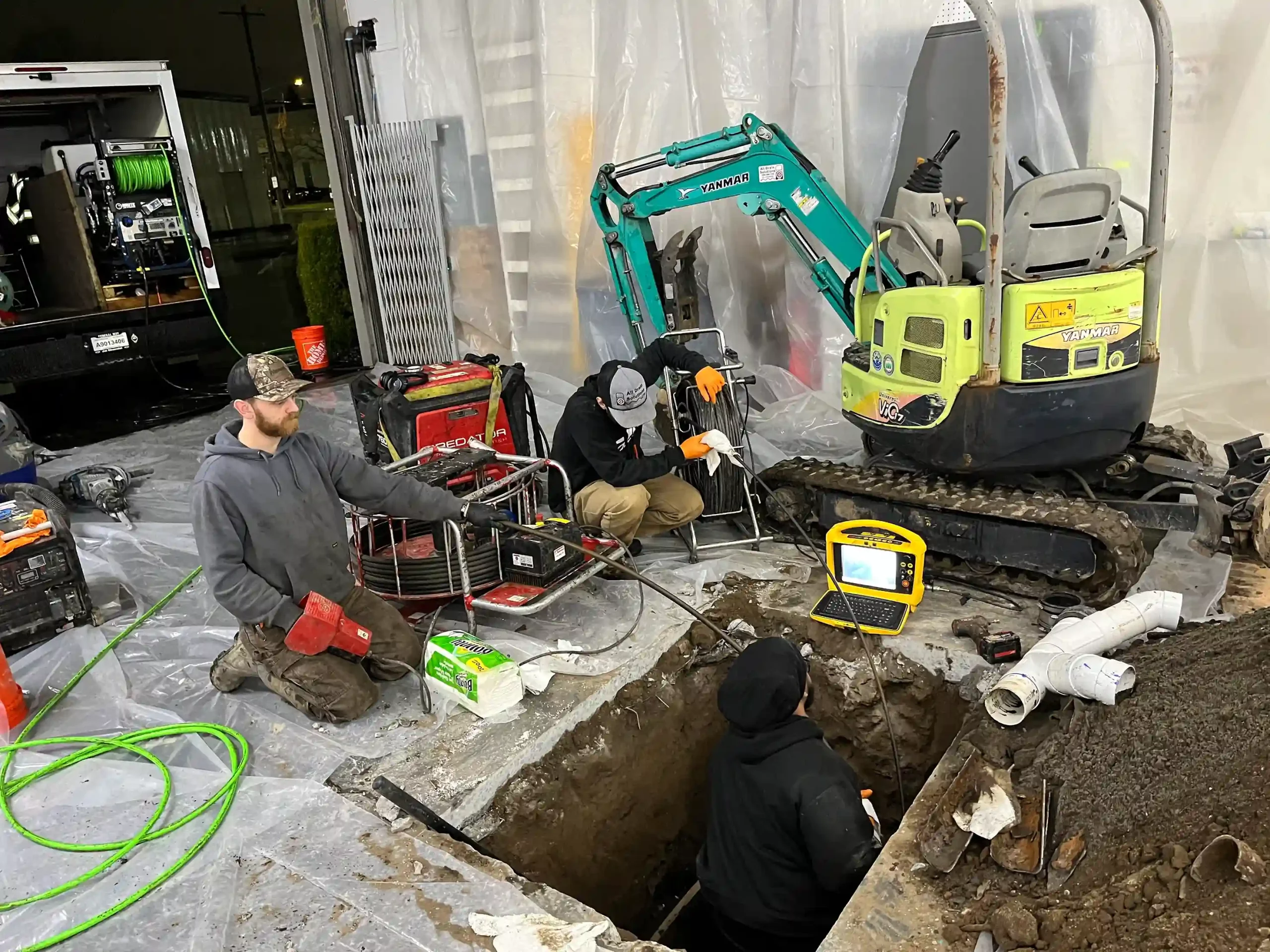
Every emergency sewer repair should begin with a camera inspection. Our team runs a high-resolution camera through the line to identify the exact location, cause, and severity of the failure. This step eliminates guesswork and ensures the repair method chosen addresses the actual problem rather than just the symptoms. Camera inspection also provides a recorded record of the pipe condition, which is valuable for insurance claims and future maintenance planning.
Cured-in-place pipe (CIPP) lining is the most widely used trenchless rehabilitation method for damaged sewer lines. The process involves inserting a resin-saturated felt or fiberglass tube into the existing pipe through an access point, inflating it against the pipe walls, and curing it with heat or UV light to form a seamless, jointless new pipe inside the old one. According to NASSCO, the National Association of Sewer Service Companies, a properly designed and installed CIPP liner provides a minimum 50-year life expectancy and can address defects including cracks, leaks, corrosion, and root intrusion in pipes ranging from 2 inches to 120 inches in diameter.
For Puyallup homeowners, CIPP lining means the sewer lateral can be rehabilitated without trenching through yards, driveways, sidewalks, or landscaping. The work is completed through existing cleanouts or small access points, and most residential repairs are finished within a single day.
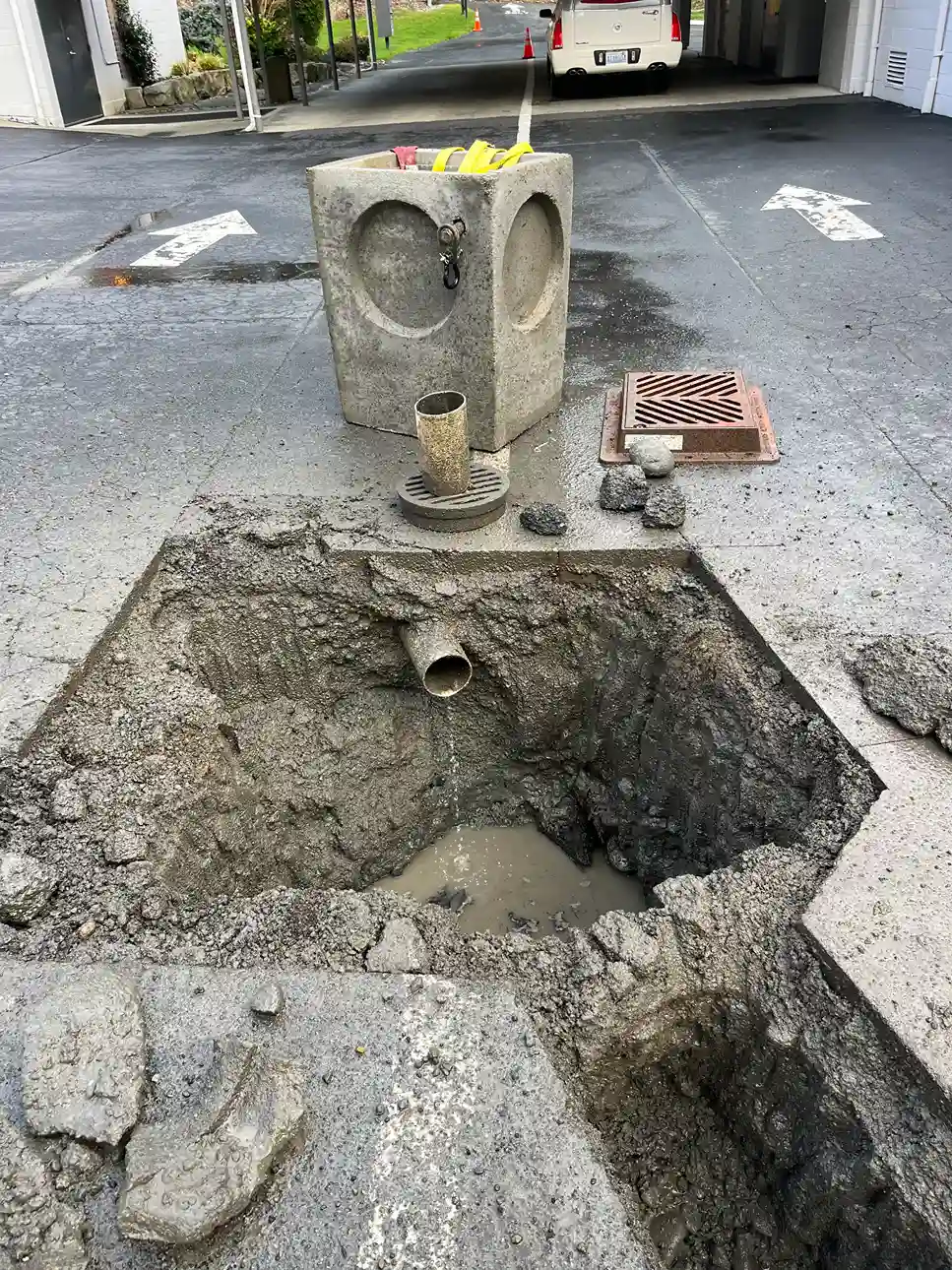
When the existing pipe is too deteriorated to support a liner, pipe bursting becomes the appropriate trenchless solution. A bursting head is pulled through the old pipe, fracturing it outward while simultaneously pulling a new HDPE or PVC pipe into place. Pipe bursting is the only trenchless method that allows for upsizing, meaning the new pipe can have a larger diameter than the original. This method is particularly effective for Orangeburg and severely collapsed clay pipes that cannot be lined.
For blockages caused by roots, grease, and debris, hydrojetting uses high-pressure water to clear the pipe and restore flow immediately. Root cutting attachments can mechanically cut through root masses that have infiltrated the pipe. Hydrojetting is often the first response in an emergency to stop active backups, followed by a more permanent repair like CIPP lining or pipe bursting to prevent recurrence.
| Repair Method | Best For | Disruption Level | Repair Speed | Longevity |
|---|---|---|---|---|
| CIPP pipe lining | Cracks, root intrusion, corrosion, joint leaks | Minimal (no excavation) | Same day | 50+ years |
| Pipe bursting | Collapsed, deformed, or severely deteriorated pipe | Low (small access pits) | 1-2 days | 50+ years |
| Hydrojetting | Active blockages from grease, roots, debris | None (internal only) | Hours (temporary fix) | Months without follow-up |
| Camera inspection | Diagnosing cause and location of failure | None | 1-2 hours | N/A (diagnostic tool) |
Prevention is far less expensive than emergency response. Properties in Puyallup, particularly those built before 1980 or located near mature trees, benefit from proactive maintenance. Scheduling a periodic camera inspection of the sewer lateral identifies small problems before they become emergencies. Avoid flushing anything other than toilet paper, and dispose of cooking grease in the trash rather than down the drain. Pierce County offers free household hazardous waste drop-off locations where residents can dispose of up to five gallons of used cooking oil. Properties with a history of root problems should consider preventive treatments and periodic root cutting to keep the line clear.
For homeowners in areas where public infrastructure is aging alongside private laterals, staying informed about the condition of both systems is part of responsible property management. The City of Puyallup’s ongoing investment in replacing aging mains through 2032 will reduce some risk, but the private lateral connecting a home to the public main remains the property owner’s responsibility.
Not every slow drain is an emergency, but certain symptoms should never be ignored. Multiple drains backing up at the same time is a clear indicator of a main sewer line problem, not an isolated clog. Sewage odor coming from drains or the yard, especially when persistent, suggests a crack or break in the line. Wet spots or unusually green patches in the yard, particularly near the path of the sewer lateral, can indicate a leak that is saturating the soil. Gurgling sounds from toilets or drains when other fixtures are in use signal that air is being forced through a compromised pipe. Any of these signs warrant an immediate camera inspection to determine the source and severity of the problem.
Choosing the right provider for an emergency sewer repair makes a significant difference in both the outcome and the experience. Look for a team that leads with diagnostics rather than assumptions. A proper camera inspection with a clear explanation of findings, including video evidence, is the first thing a qualified service provides. Transparent communication about the cause of the problem, the available repair options, and what each option involves demonstrates that the team prioritizes the customer’s understanding and agreement over speed or upselling. Response time matters in emergencies, and a provider with local availability in the Puyallup area can reach the property faster and complete the work sooner. Finally, the right team offers solutions that balance immediate repair needs with long-term pipe health, rather than applying a temporary fix and leaving the underlying cause unaddressed.
All Drain Solutions provides emergency sewer repair services to residential and commercial properties throughout Puyallup and the surrounding communities. Our team uses camera inspection technology and trenchless repair methods, including CIPP pipe lining and pipe bursting, to diagnose and resolve sewer emergencies with minimal disruption to your property. We respond quickly, communicate clearly, and stand behind our work with lasting solutions that address the root cause of the failure.
Request a Free Quote | Schedule an Inspection
Call us at (253) 200-0451 or email [email protected] to get fast, professional help for your sewer emergency.
How quickly can emergency sewer repair be completed?
Most trenchless sewer repairs, including CIPP pipe lining, can be completed within a single day once our team arrives on-site and completes the initial camera inspection.
What are the most common signs of a sewer line problem?
Multiple drains backing up at once, persistent sewage odors, gurgling sounds from drains, and wet or unusually green patches in the yard along the sewer lateral path are the primary warning signs.
Does trenchless repair work for all pipe types?
Trenchless methods like CIPP lining work on most pipe materials including clay, cast iron, PVC, and concrete. Severely collapsed or deformed pipes may require pipe bursting instead of lining.
Can tree roots be removed without replacing the pipe?
Yes, root cutting and hydrojetting can clear root blockages temporarily, but without a permanent repair like CIPP lining, roots typically return within months.
Are products labeled “flushable” actually safe for my sewer line?
No. Pierce County’s sewer division warns that wipes and hygiene products do not break down like toilet paper and are a leading cause of sewer blockages in both private and public systems.